Event 1
Connell and Marianne begin a secret relationship

[Connell and Marianne begin a secret relationship](entity:event-recall-event-connell-and-marianne-be-975287009488) when a conversation in [Marianne](entity:character-recall-character-marianne-bce7426f25b0)’s family home turns into a kiss and then a private intimacy that [Connell](entity:character-recall-character-connell-537046691930) insists must remain unknown at school. The secrecy gives them a space for unusual candour and closeness, but it also exposes the gap between their private attachment and Connell’s public caution. As their bond continues through school, university, and long-distance correspondence, the relationship becomes a recurring measure of what each can say, risk, and ask of the other.
## The First Admission and the Rule of Secrecy
Their relationship begins after Marianne asks Connell whether his friends know that he reads beyond schoolwork. The conversation moves from his friends’ interests to whether he likes her. When she clarifies that she means more than friendship, Connell says he is confused about his feelings and worries that anything between them would be awkward at school. Marianne answers that nobody would have to know. He looks directly at her and kisses her; afterward, both are embarrassed, and their laughter turns the moment into a shared discovery rather than a performance for anyone else.
Before leaving, Connell asks her not to tell people at school. Marianne understands the kiss as a private sign that she has passed some unspoken test, but the arrangement leaves her with little certainty about what the relationship means. Connell’s reserve persists when he returns to her home to collect his mother: Marianne initially retreats to her room, unsure why one unexplained kiss should make her feel that she knows him intimately. He follows and seeks reassurance that she is not angry. Their closeness resumes, but when Marianne asks to take off their clothes, he stops, citing the presence of his mother downstairs and calling the situation stupid. The moment establishes the pattern of desire accompanied by hesitation and unspoken limits.
## Private Intimacy, Public Distance
After they have sex for the first time, Marianne stays overnight at Connell’s house. For Connell, the encounter is distinct from his previous experiences because he believes that what happens between them will remain theirs alone. The next morning he kisses her goodbye, then washes the sheets. His mother, [Lorraine](entity:character-recall-character-lorraine-4a3d0ed0f14d), notices the laundry but does not press him to explain. In school, by contrast, Connell avoids looking at or speaking to Marianne. She behaves as usual, while he experiences their concealed relationship as a secret he must carry without letting it show.
Connell tells himself that the encounter was a one-off and that he will not see Marianne again. Yet he finds himself thinking about her and goes to her house after school. Their private intimacy deepens, while his reluctance to acknowledge it openly remains. The separation between these settings is especially clear at the school Debs fundraiser: Marianne knows Connell and his friends are expected, texts him about their absence, and receives his reply that they are on their way. In public, however, she cannot make their private connection into social standing or claim the special knowledge she has of him. The secret protects their intimacy, but it also leaves her watching and waiting while others occupy the visible social world.
## A Relationship Shaped by Class and Constraint
Their secrecy is bound up with differences in social position. Marianne knows that her family is considered respectable and Connell’s is not, even as Connell is popular and admired at school. She is unfamiliar with much of [Carricklea](entity:location-recall-location-carricklea-95719fd7e6e1) beyond her narrow routines, while Connell can describe places and local customs she has never encountered. His mother works as a cleaner in Marianne’s family home, a fact that makes the class distinction concrete but remains difficult for Connell to discuss. Their private relationship crosses a public divide that neither knows how to address directly.
The imbalance also appears when Connell’s finances become precarious in [Dublin](entity:location-recall-location-d7ee455b2147). After his work hours are cut, he realizes he may no longer be able to afford his rent and considers asking Marianne if he can stay with her. He expects that she would agree, but delays the conversation because asking feels too much like asking her for money. They have not discussed the money that passes from Marianne’s mother to Lorraine for domestic work, or how that income indirectly affects Connell. Marianne’s habit of paying for dinners and theatre tickets without keeping account of them contrasts with his awareness of what accepting help might mean. His silence about rent shows how economic dependence can enter their relationship even when neither speaks of money.
## Distance, Communication, and Continuing Attachment
When Connell and Marianne are apart, their relationship continues through messages and email. During a summer trip across European cities, Connell follows a routine of calling Helen, messaging his mother, and writing to Marianne. His emails to Marianne grow lengthy: he drafts them in spare moments, revises their sentences, and finds that hours pass while he writes. He sends her accounts of places he visits and links about current events, while she writes about her life and thoughts. The correspondence gives Connell a sustained way to express himself that he struggles to reproduce in ordinary conversation.
Their digital intimacy is not simply a substitute for being together. Their emails about the Edward Snowden story make them conscious that the same communication technologies carrying their feelings are subject to surveillance; Marianne jokes that an observer might misunderstand the relationship and miss its history. Earlier, their conversation about photographs had likewise made digital privacy part of their intimacy: Marianne asks about the expectations around sending and deleting images, and Connell explains the conventions. These exchanges show how they negotiate trust and exposure while trying to keep their connection private.
## Separation, Reputation, and the Relationship’s Wider Meaning
The relationship does not resolve into a stable public partnership. After Connell returns home for the summer, Marianne is neither his girlfriend nor, in her own understanding, his ex-girlfriend. Their earlier closeness—being best friends, staying up together, and sharing sex—stands in sharp contrast to this uncertainty. Later, after [Marianne breaks up with Jamie](entity:action-recall-action-c790726ed2ea), her social circle turns against her, and the consequences of the breakup become entangled with rumours about her private life. She describes the shame as overwhelming, then recognizes that it eventually passes. Connell understands that [Jamie](entity:character-recall-character-jamie-9ab1c29c9c6f)’s reputation is treated differently from Marianne’s and begins to recognize the gendered imbalance in the damage each faces.
Even after these ruptures, the relationship remains a central point of comparison in both lives. When they speak about loneliness, Marianne says she has been lonely her whole life; Connell acknowledges the feeling and says that he was sometimes lonely even with Helen. Their intimacy does not erase isolation or guarantee that they will communicate well. Instead, its significance lies in the tension the story sustains between what they share privately and what they can manage in public: the secret begins as Connell’s protection from school judgment, but becomes part of a longer pattern in which affection, social status, money, reputation, and silence shape their changing bond.
Event 2
Assault at the 2011 school Debs fundraiser
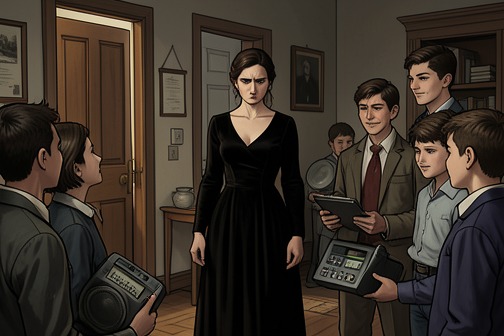
[Assault at the 2011 school Debs fundraiser](entity:event-recall-event-2011-debs-3019fc0a7cfa) is a turning point in [Marianne Sheridan](entity:character-recall-character-marianne-sheridan-a36bd5691973) and [Connell Waldron](entity:character-recall-character-connell-waldron-c068fca7504d)’s relationship. When a man at the event touches [Marianne](entity:character-recall-character-marianne-bce7426f25b0) without her consent, the response of several classmates compounds the violation; [Connell](entity:character-recall-character-connell-537046691930)’s decision to challenge them and take her home opens a more intimate conversation, in which Marianne tells him that her father abused her mother and sometimes her as well. The night culminates in Connell reassuring her and saying that he loves her.
## Setting and Social Context
The incident takes place at a school Debs fundraiser, where Marianne is helping the committee sell raffle tickets despite feeling like an awkward outsider among the other girls. She has been observing her classmates from a distance; working the event forces her to participate in their conversations and social rituals. As the room fills and the music starts, she waits for Connell and the other boys to arrive, keeping an eye on the door and exchanging messages with him about their lateness.
When the boys arrive, Marianne is wearing a black dress and holding the raffle book. Connell does not initially meet her gaze, while [Eric](entity:character-recall-character-eric-7ec3f96e28e6) compliments her appearance. The other boys’ attention and the crowd’s teasing place Marianne under a new kind of scrutiny. She has ordered gin and tonics despite rarely drinking, and by the time the incident occurs she has had several. The setting thus combines a school social event, alcohol, and a hierarchy of popularity in which Marianne is both conspicuous and poorly protected.
## The Assault and Its Immediate Aftermath
Eric introduces Marianne to an older man who has arrived with other men not meant to be at the ticket-holder-only event. The man offers to buy her a drink, then puts an arm around her shoulders despite her attempt to shrug him off. When Marianne asks him to let go, he comments on her dress and grabs her breast. She pulls away and covers herself, while people behind her laugh. The man’s conduct is presented as unwanted and humiliating, not as a joke or mutual flirtation.
Marianne leaves without turning around. In the hallway, she cannot immediately remember which way the exit is; shaking, she lowers herself to the floor and holds her knees against her chest. She is uncertain how drunk she is, but knows that the man has hurt her. Her response makes the scene’s reversal plain: the fundraiser that required her to perform sociability becomes a place from which she must escape, and the classmates’ laughter leaves her isolated at the moment she needs support.
[Karen](entity:character-recall-character-karen-5edf61fe2c90) comes out to check on her, followed by Eric, Rachel, and Connell. Karen crouches beside Marianne and asks if she is all right. Eric calls what happened a bit of fun and defends the man as someone worth knowing; Rachel says she found it funny and insists that everyone had been laughing. Karen challenges them for treating molestation as entertainment. Connell adds that their account is untrue. His intervention does not undo what happened, but it breaks the group’s apparent consensus that Marianne’s distress is amusing or undeserved.
## Connell’s Response and the Journey Home
Connell’s public response is notable because Marianne has never seen him act aggressively at school, even when other people taunt him. He tells Rachel to leave, then turns his attention to Marianne and asks whether she wants to go home. He offers to drive her, keeping his hands in his pockets as they leave, as if to avoid touching her accidentally. Karen helps Marianne up, and Marianne thanks her, still apologizing and saying she feels foolish for having drunk too much. Karen tells her that the incident is not her fault.
In the car, Marianne apologizes again for making a fuss. Connell says she did not and criticizes the others for excusing the man because he hosted parties. When Marianne says that the assault really hurt, Connell does not immediately answer; he kneads the steering wheel, looks down, and apologizes. His silence and visible discomfort register the weight of what she has told him without displacing her account of it.
Connell asks whether Marianne would like to come to his house for a while before he takes her home. He says his mother, [Lorraine](entity:character-recall-character-lorraine-4a3d0ed0f14d), is probably asleep and would not mind. Marianne understands the suggestion as an indication that he is not concerned about his mother discovering their relationship. At Connell’s house, she calls Lorraine a good parent and says Connell has turned out well, a judgment that he questions rather than simply accepting.
## Disclosure and Declaration of Love
In Connell’s room, Marianne tells him that her breast still hurts where the man grabbed her. Connell comforts her, tells her that it is all right to be upset, and smooths her hair as she lies against him. She asks whether he would ever hit a girl. When he answers that he would not, she explains that her father used to hit her mother and sometimes hit her too. Connell had not known about this before. He responds with sympathy, kisses her forehead, and promises that he would never hurt her.
Connell tells Marianne that she makes him happy and says that he loves her. The declaration follows a night in which he has defended her publicly, listened to what she has disclosed privately, and offered reassurance without treating her distress as excessive. For Marianne, who has never believed herself fit to be loved, the moment becomes inseparable from the assault’s aftermath and from the possibility of being cared for. She later identifies it as the beginning of a new life.
## Consequences and Significance
The immediate outcome is not a resolution of the school’s social cruelty: several classmates minimize the assault or laugh, while Karen and Connell oppose that response. But the episode clarifies the difference between being made the object of attention and being treated with care. The older man’s unwanted approach, his friends’ laughter, and the classmates’ defense of him expose the vulnerability built into the event’s social world; Karen’s support and Connell’s refusal to go along with the joke offer a counterexample.
The scene also brings Marianne’s family history into her relationship with Connell for the first time. Her question about whether he would hit a girl leads not to a general discussion but to a disclosure of what she has experienced at home. Connell’s promise and declaration of love connect his response to the immediate event with a deeper change in their intimacy. Later, the scene’s emotional force persists in Marianne’s memory: she regards that night as the start of her life, making the fundraiser not only a site of public humiliation but also the setting for a private recognition of love and trust.
Event 3
Connell invites Rachel Moran to the Debs
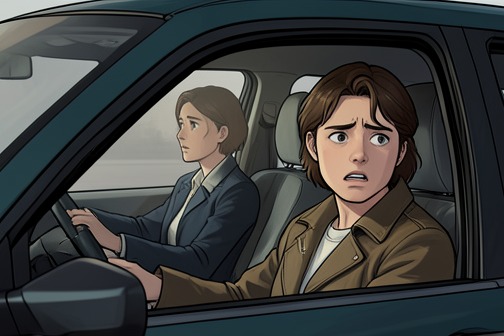
[Connell invites Rachel Moran to the Debs](entity:event-recall-event-connell-rachel-moran-de-92de91f6f18b) after his classmates’ teasing makes his private relationship with [Marianne](entity:character-recall-character-marianne-bce7426f25b0) a source of social pressure. The choice is not merely a date for a school dance: it exposes the divide between [Connell](entity:character-recall-character-connell-537046691930)’s public life and his intimacy with Marianne, and its consequences help drive her out of school and end their contact for a time.
## Background and Decision
At school, Connell’s classmates speculate about whether he has slept with Marianne and treat her as an object of gossip. Rachel says that everyone knows Marianne fancies him; [Eric](entity:character-recall-character-eric-7ec3f96e28e6) presses him to admit what happened, while Lisa objects to their cruelty. Connell denies having slept with Marianne, but the exchange leaves him visibly uncomfortable. Eric then turns the teasing into a suggestion that Connell should ask Marianne to the Debs, prompting laughter rather than a serious discussion of what she wants.
Connell withdraws to a bathroom cubicle, where the group’s attention gives way to his private fear. He remembers telling Marianne that he loves her, and imagines her going about her day without knowing what he has said. In the car with his mother, [Lorraine](entity:character-recall-character-lorraine-4a3d0ed0f14d), he eventually admits that he asked Rachel to the dance. His disclosure reveals the choice as a response to pressure and concealment, not as a decision made with Marianne’s knowledge.
On the walk back from lunch, Connell had deliberately hung behind the others because he knew Rachel would wait for him. He asked whether she already had a date; when she said no, he invited her. Rachel accepted, but remarked that she had hoped for something more romantic. Connell did not answer. The account presents his invitation as an awkward, deliberate act that he experiences as a plunge into a decision he cannot easily undo.
## Lorraine’s Confrontation
Lorraine asks who Marianne will attend the Debs with. Connell says he does not know and suggests she may go with no one. When Lorraine asks whether Marianne knows he is taking someone else, he admits that he has not told her yet. He insists that his relationship with Marianne was agreed between them, but Lorraine challenges the secrecy and asks whether he feared what his classmates would say if they found out.
The argument is about more than the dance. Lorraine interprets Connell’s silence as a way of protecting his social position at Marianne’s expense, and tells him she is ashamed of him. He objects to her involvement, but she leaves the car rather than continue the argument. Connell stays behind, thinking of the years he spent working after school to buy the car he is sitting in. Instead of following Lorraine, he starts the engine. The scene makes his independence and his dependence on his mother visible at once: the car is his, but she has been driving with him because she does not have a licence.
## Marianne Learns of the Invitation
In April, Connell tells Marianne that he is taking Rachel to the Debs. Marianne is sitting on the side of his bed and tries to keep her manner cold and humorous. Connell describes himself and Rachel as just friends, then distinguishes that arrangement from his relationship with Marianne. When Marianne asks whether he is sleeping with Rachel or wants to, he says he is not and does not particularly want to; he adds that he already has Marianne. She does not understand the joke he says he was making, and asks him to tell her if he ever wants to sleep with Rachel.
Marianne says that the issue is not simply whether Connell might have sex with Rachel. When she asks what the issue really is, he stares at her and does not answer. He neither apologises nor admits that asking Rachel has humiliated her. Marianne eventually laughs, but the laugh does not resolve the injury: she goes home and sleeps for thirteen hours. His silence leaves her to interpret the decision as evidence that he is willing to keep their relationship private while presenting himself differently to other people.
## Consequences for Marianne
The next morning Marianne decides she cannot return to school. She had organised fundraisers and booked the Debs venue, yet sees no prospect of attending the event herself. She expects other students to know that she has no invitation, and believes that some will be glad while even sympathetic classmates will feel embarrassed for her. Rather than face the school’s attention and whispers, she stays home, studying and sleeping at irregular hours.
Her mother responds angrily: doors are slammed and Marianne’s dinners are thrown away. Marianne nevertheless maintains her decision. She has left the school’s uniform and its daily scrutiny behind, and sees herself as an adult who cannot be compelled to return. She later sits the exams, but never goes back to school as a student. Rumours circulate that she has been in a mental hospital, a further sign of how little control she has over the story others tell about her.
A week after Marianne leaves school, Lorraine visits and asks whether everything is all right. Marianne says she is not going back. When Lorraine mentions that Connell says Marianne is ignoring his calls, Marianne acknowledges that she is. Lorraine supports her, saying Connell does not deserve her and that he is barred from the house. Marianne asks that he not come inside if he has to collect Lorraine. Even while she minimises what he did in comparison with other students, Lorraine embraces her tightly, offering care in a moment when Marianne is withdrawing from school and from Connell.
## Aftermath and Significance
Marianne’s account of the break is severe: she thinks Connell used their private relationship as an experiment and that she had mistaken his intimacy for evidence that he accepted her socially. Yet she also recognises that he did not pretend she was socially acceptable; she believes she had deceived herself. This retrospective judgment complicates the rupture without erasing its immediate consequence: she leaves school, stops answering his calls, and no longer sees him as someone she can rely on to acknowledge their relationship publicly.
The invitation reverberates beyond the school year. In a later conversation, Marianne recalls that she did not hold [Rob](entity:character-recall-character-rob-2c4f1be85baf)’s bullying against him, and reflects on how cruelty can wound the person who inflicts it as well as its target. Her memories of school remain bound to the social world in which Connell’s choice took shape, though the account does not make his invitation the sole cause of everything that follows. As an event, it marks the point at which a private relationship’s secrecy becomes unsustainable: Connell’s attempt to manage how others see him leaves Marianne bearing the public and personal cost.
Event 4
2011年 Debs 舞会之夜

The 2011 Debs is the night [Connell](entity:character-recall-character-connell-537046691930) learns that his classmates have long known about his relationship with [Marianne](entity:character-recall-character-marianne-bce7426f25b0). The discovery overturns the logic behind keeping her private: Connell realizes the secret cost both of them happiness without earning him acceptance or even protecting him from gossip. He leaves the event without saying goodbye, and the relationship that had shaped their school years ends amid the ordinary dispersal of people moving away.
## Background and Stakes
By the time of the dance, Connell is attending with Rachel, whose family photographs them before the evening and whose plans for his future include his going to [Trinity College](entity:location-recall-location-436ba4081c98). The pairing places him within the familiar social world of his schoolmates, while his unacknowledged history with Marianne remains an unspoken presence. Rachel had often referred to private conversations with Connell in Marianne’s company, but Connell had not responded to Marianne’s hints about this closeness.
At dinner, the group’s conduct makes the social setting’s casual cruelty plain. [Rob](entity:character-recall-character-rob-2c4f1be85baf) shows Connell and [Eric](entity:character-recall-character-eric-7ec3f96e28e6) naked photographs of Lisa on his phone. Connell objects that showing them to other people is wrong; Rob dismisses him as having become “awfully fucking gay about things lately.” The exchange sets up the evening’s larger conflict: Connell is beginning to object to behavior his friends treat as normal, but remains entangled in the same culture of status and silence that shaped his treatment of Marianne.
## The Smoking Garden
At midnight, Connell leaves the ballroom for the smoking garden. Eric follows, mentions that Marianne did not come, and asks what had been happening between them. Connell denies knowing what he means. Eric then states that everyone already knows Connell had been sleeping with her. The revelation is not that the relationship has just become public, but that Connell’s supposed secret was never secret to the people whose judgment he feared.
Connell recognizes the disproportion between the price he and Marianne paid and the consequences he had imagined. He had sacrificed their happiness to conceal the relationship, yet concludes that they could have walked through the school corridors together and that, in practice, nobody would have cared. His brief reply does not undo the earlier choice; it registers the futility of having made it. He stubs out his cigarette, returns for his jacket, and leaves without saying goodbye to anyone, including Rachel.
## Immediate Aftermath
Rachel breaks up with Connell shortly afterward. The end of their relationship follows his abrupt departure from the Debs rather than a public confrontation or a final reckoning. The school years themselves also close without a formal conclusion: people move away, Connell moves away, and the life in [Carricklea](entity:location-recall-location-carricklea-95719fd7e6e1) that he and Marianne had treated as momentous is not resumed in the same way.
The night’s emotional consequence is therefore less a dramatic public exposure than a delayed recognition. Connell discovers that his fear of social consequences had governed an important choice without being justified by the group’s actual knowledge or apparent concern. The realization arrives too late to restore what his silence cost Marianne or to change the immediate course of his life.
## Later Echoes
Years later, Connell’s memory of the Debs returns in the context of his university life and his correspondence with Marianne. Their emails are shaped by a shared interest in the Edward Snowden story and the architecture of surveillance; Marianne jokes that an NSA agent reading them would not know about the time Connell did not invite her to the Debs. The old exclusion remains available between them as a remembered fact, even as they resume an intimate correspondence.
The night also acquires a darker resonance after Rob dies by suicide. Connell receives a group message asking whether anyone has seen Rob, but tells Helen it is only a group message and wishes her a happy new year. The next day Rob’s body is recovered from the River Corrib. Connell later remembers that Rob’s last message to him, sent years earlier, had referred to Connell’s relationship with Marianne; Connell never replied. In counselling, he links his guilt to the unanswered message and to having lost touch with Rob. Marianne, reflecting on Rob’s death, recalls his participation in the bullying she endured, but also wishes she could have forgiven him. These later memories do not alter what happened at the Debs; they show how a seemingly concluded school past continues to shape grief, regret, and the meaning Connell and Marianne give their shared history.
Event 5
Connell and Marianne reunite in Dublin
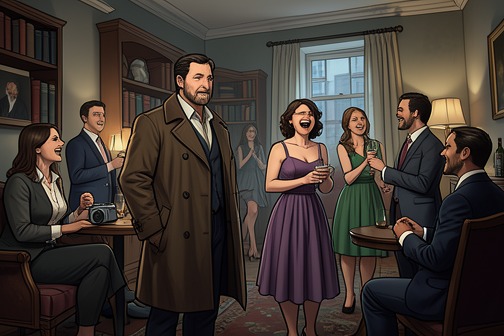
[Connell and Marianne reunite in Dublin](entity:event-recall-event-connell-marianne-48e923b2c9cb) at a [November 2011](entity:time-recall-time-november-2011-43c5c5c99acf) party, where a brief introduction becomes a private conversation charged with affection, embarrassment, and things left unsaid. The encounter reverses their earlier social positions: [Marianne](entity:character-recall-character-marianne-bce7426f25b0) now belongs among friends at the party, while [Connell](entity:character-recall-character-connell-537046691930) feels isolated in college. Their warmth returns, but Connell still cannot bring himself to apologize for the hurt that separated them.
## Background and Separation
Three months before the party, Connell is lonely and uncomfortable in [Dublin](entity:location-recall-location-d7ee455b2147). He attends a gathering alone after his mother, [Lorraine](entity:character-recall-character-lorraine-4a3d0ed0f14d), encourages him to go out and meet people. The person who lets him in is not Gareth, the college student who invited him, and Connell spends much of the evening unsure whether he should remove his jacket. When Gareth finally appears, Connell feels disproportionate relief, followed by self-reproach for relying on someone he barely knows. Gareth’s ease among college acquaintances throws Connell’s sense of social invisibility into relief.
Connell’s unease follows a longer period of distress after Marianne left school in April. He had missed her company and the way she made him feel, but his calls and daily messages went unanswered. Lorraine told him he was barred from visiting Marianne’s house. Connell tried to blunt his feelings by drinking too much and having sex with other girls; one encounter left him so distressed that he vomited and could not speak honestly with the other person about why. He was excruciatingly lonely and repeatedly dreamed of being close to Marianne again. When he asked Lorraine whether Marianne was overreacting by not replying, Lorraine told him that he had acted exploitatively and hurt a vulnerable person.
By November, the separation has also changed their social circumstances. Connell is living in Dublin without the familiar reputation he had at school, and he feels self-conscious about his inexpensive clothes, including the old Adidas trainers he wears everywhere. Marianne, meanwhile, has become part of a university social circle. Their reunion will make that reversal visible before either of them explains it.
## The Reunion at the Party
The party takes place in a crowded college setting. Connell has brought cider, but is reluctant to draw attention to his plain navy backpack. Gareth offers him a bottle of Corona and then introduces him to his girlfriend. On the front steps, Connell recognizes Marianne among a group of people smoking and talking. Her delighted smile and immediate recognition transform the encounter: she addresses him by his full name and presents him to Gareth and her friends as someone she knew at school.
Marianne invites Connell inside to get a glass for his beer. Once they are alone in the quiet kitchen, she asks how he knows Gareth; Connell explains that they share classes and calls Gareth a campus celebrity. Marianne laughs. For a moment the old intimacy seems to make their history harmless, as though they had entered a private world untouched by what happened between them. Yet the social facts remain: Marianne is among friends and appears at ease, while Connell has been struggling to find his place.
Marianne tells him she has missed him. The directness catches Connell off guard and makes him blush; he pours the beer into the glass rather than meeting the admission plainly. He says that he missed her too and was worried when she left school. Marianne points out that they did not spend much time together during school hours, a reminder that their closeness had largely occupied private spaces rather than their public lives.
## Affection, Irony, and the Unsaid Apology
They exchange news about relationships. Marianne asks whether Connell is still with [Rachel Moran](entity:character-recall-character-rachel-moran-cf8d8d4674ed), and he says they broke up during the summer. Marianne offers sympathy in a tone that sounds almost, but not quite, sincere. Their exchange lets them approach the history between them obliquely, through teasing and social comparison rather than an explicit account of the separation.
Connell asks about Marianne’s boyfriend, [Jamie](entity:character-recall-character-jamie-9ab1c29c9c6f). She explains that they disagree on some political matters, including the campus debate over a neo-Nazi speaker. Connell jokes about the contradiction and their compromised ideological standards; Marianne laughs sincerely. The ease of the exchange pleases him, although he anticipates that he may later regret what he says. The political disagreement becomes less a serious argument than a route back into a familiar style of teasing.
When Connell admits that he is not seeing anyone and finds it difficult to meet people, Marianne offers to introduce him to some of her friends. He doubts they would like him. Her response—that there is nothing not to like about him—makes the exchange more intimate. Her gaze unsettles him because he feels she sees through him. He recognizes that he is attracted to her, and that she is being playful partly to show she is not bitter. Still, he does not say the apology he had imagined giving her if they met again. He cannot tell whether Marianne is refusing to acknowledge the possibility of an apology, or whether he is using that uncertainty to avoid making one.
## Reversal and Narrative Significance
The party scene reverses their school-era social arrangement without erasing their shared past. Connell once had a recognizable place among his school peers; in Dublin he experiences himself as socially invisible. Marianne, whom he meets through Gareth, now has friends and a place in the room. Her public introduction of Connell establishes their former connection, while the private conversation recovers a closeness that their public lives had concealed.
The reunion does not settle the injury that preceded it. Its emotional turn lies instead in the contrast between what they can say and what remains withheld: Marianne openly says she missed him, and Connell returns the feeling, but his apology remains unspoken. The scene reopens their connection without making it simple or restoring the past. Its movement from an awkward party encounter to a warm private exchange shows how quickly they can recognize one another, and how difficult it remains for Connell to take responsibility for the harm between them.
Event 6
Connell and Marianne resume their intimate relationship
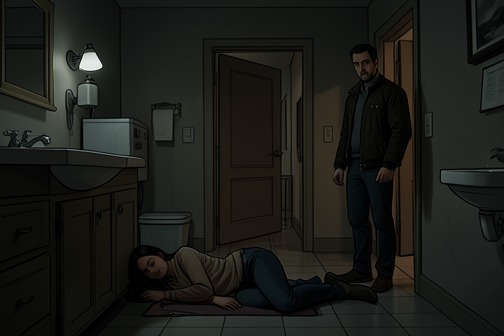
[Connell and Marianne resume their intimate relationship](entity:event-recall-event-connell-marianne-cc933febc21a) in [Dublin](entity:location-recall-location-d7ee455b2147) after a period apart, but the return to closeness is defined as much by conversation as by sex. Their reunion gives them a chance to revisit the secrecy and hurt of their school relationship, and to acknowledge that their feelings have survived it. Yet they do not immediately settle into a public or clearly named partnership: the intimacy they recover is real, while its terms remain uncertain.
## Background and Renewed Contact
At a party, [Marianne](entity:character-recall-character-marianne-bce7426f25b0) becomes extremely drunk and high and approaches [Connell](entity:character-recall-character-connell-537046691930) while he is alone on a landing. She asks whether he prefers Teresa, whom he has been seeing casually, and presses him for reassurance. When Marianne tries to kiss him and asks to have sex, Connell refuses because she is intoxicated. He tells her to go to bed; after a brief, friendly kiss, he leaves. Marianne falls asleep on a bathroom floor and wakes the next morning after Connell has asked someone to find her. The episode establishes both her longing for him and the boundary he maintains when she is too impaired to make a clear decision.
By the time they are spending evenings together in Dublin, the pattern has changed. They see one another often, and Connell visits Marianne’s apartment, where she lives alone. Their time together includes ordinary companionship: they drink wine, and he talks to her about the difficulty of making friends at [Trinity College](entity:location-recall-location-436ba4081c98). He is not similarly at ease with all of her friends. Some of the women are fond of him, while the men tend to tolerate him as Marianne’s companion rather than value him independently. Their private ease therefore stands in contrast to the social world Connell finds difficult to enter.
## Conversation About the Past
An evening that begins with Connell staying over becomes a turning point because they finally discuss what happened at school. They have previously avoided the subject. Marianne says she would be embarrassed if her university friends knew about their past, not because she had disclosed it, but because the secrecy and the way Connell treated her had been humiliating. She recalls that she would have accepted an invitation from him to the Debs. Connell admits that he never thought to invite her and says he wishes he had.
Connell also tells her that their schoolmates had known they were seeing one another. [Eric](entity:character-recall-character-eric-7ec3f96e28e6) had mentioned this at the Debs, but, as Connell explains, no one had cared very much. The revelation alters the meaning of the secrecy: Connell had feared exposure, and Marianne had borne the consequences of that fear, although public knowledge would not have produced the catastrophe he imagined. He recognises that his anxiety was largely in his own head and that he had projected it onto her. He does not present that explanation as an excuse; he says he is still thinking about why he acted as he did and feels guilty about what he said.
Marianne forgives him. Connell says he thinks he has learned from the experience and changed, and credits her with that change. Their hands remain joined beneath the quilt even after they fall asleep. This small, sustained gesture gives physical form to a conversation that had long been missing: neither a declaration that the past can be undone nor a denial that it mattered, but an exchange in which he takes responsibility and she chooses to forgive him.
## Intimacy Restored
The renewed relationship also develops through moments of shared confidence rather than through a formal announcement. At a gathering in a basement bar, Connell quietly joins a game of pool. He makes a series of shots without trying to dominate the conversation; Marianne’s amused comparison of his concentration to an advertisement makes the others laugh, including Connell. Later he stays at her apartment, and in bed he asks whether her friends know about their past. Their talk about the school relationship follows, making the night a bridge between their present closeness and the history they had kept unspoken.
On another visit, Connell accompanies Marianne back to her apartment. She showers while he gets something to eat; when she returns, he is checking his email. Their physical relationship resumes after nearly a year. They spend time together afterward, speak little, and later have sex again. Marianne says that it is not like this with other people, and Connell agrees. His response confirms their shared sense of a distinctive intimacy, but it does not answer every question between them: Marianne senses that he is holding something back, and cannot tell whether he is resisting vulnerability or the possibility of pulling away.
Connell tells her that he thinks they will be fine. Marianne is too tired to know exactly what he means, and falls asleep. The reassurance matters precisely because it is not accompanied by a fully worked-out account of their future. The scene offers closeness and hope, while leaving the relationship’s practical and emotional terms open.
## Privacy, Disclosure, and Separation
For a time, Connell and Marianne do not advertise their relationship. At a later gathering, [Peggy](entity:character-recall-character-peggy-68a825115f0d) asks directly whether they are sleeping together. Connell says nothing at first, but Marianne confirms it and tells Peggy that they had also been involved at school. She then checks whether Connell minds her saying so. He smiles, and she smiles back. Compared with the fear and silence surrounding their relationship in secondary school, this is a modest but important change: Marianne can acknowledge their history in front of a friend, and Connell does not respond by withdrawing.
The relationship nevertheless remains unsettled. After the exams, Connell moves home for the summer while Marianne stays in Dublin. He says he wants to see other people; she accepts this without arguing. Their subsequent chance encounter makes clear how little of their closeness has been given a stable public name: Marianne thinks that, since she was never really his girlfriend, she is not even his ex-girlfriend. The memory of their friendship and intimacy persists, but the separation exposes the difference between resuming a relationship in private and agreeing on what that relationship means.
## Significance
This episode of renewed intimacy reverses the earlier pattern of concealment without erasing its effects. In school, Connell’s anxiety about what others might know helped produce humiliation and silence; in Dublin, he can name that failure, listen to Marianne’s account, and accept responsibility. Marianne, in turn, is able to forgive him and later to acknowledge their past to Peggy. The change is therefore not simply that the two have sex again, but that their closeness can include a more honest account of what injured it.
At the same time, the reunion does not settle into a conventional, secure romantic resolution. Their unspoken understanding and physical ease coexist with hesitation, privacy, and eventual summer separation. The contrast between their intimate life together and Connell’s difficulty belonging among his university peers also keeps their relationship tied to the larger question of where each of them feels accepted. Their renewed bond offers genuine comfort and the prospect of mutual change, but the later separation shows that emotional intimacy alone cannot make their future certain.
Event 7
Connell accompanies Marianne to the anniversary Mass for her father

[Connell accompanies Marianne to the anniversary Mass for her father](entity:event-recall-event-connell-marianne-cb1ac0deb50e) after an unexpected meeting in [Carricklea](entity:location-recall-location-carricklea-95719fd7e6e1). The offer turns an awkward reunion into an act of support: although they have been distant, he agrees to stand with her at a family observance, and [Marianne](entity:character-recall-character-marianne-bce7426f25b0) anticipates that they will be friends again.
## The invitation
Marianne tells [Connell](entity:character-recall-character-connell-537046691930) that she has come home for her father’s anniversary Mass, scheduled for half past ten the next morning. She admits that she did not particularly want to attend, but that her mother insists. Connell apologises for not having realised the significance of her visit and asks whether she would like him to come. He makes clear that he will not insist if she would rather go alone, but says he would like to be there.
The offer comes while they are sitting in [Connell’s car](entity:object-recall-object-connell-5e1f75ee7e5e) near Marianne’s home. Their conversation has already exposed the distance between them: he says he had been ignoring her messages, and she apologises for doing the same. When Connell cautiously suggests they need not remain friends if she no longer wants that, Marianne answers that she does. His offer to accompany her gives that reassurance a concrete form, without requiring either of them to resolve everything they have left unsaid.
## A return to friendship
Connell pulls into the gravel driveway of the [Sheridan family home](entity:location-recall-location-sheridan-4f57bf3bf529). Marianne’s mother is away, and the house’s large white facade seems disapproving to Marianne. Connell agrees to meet her at the church the following morning. She invites him in for tea, but he declines because there is ice cream in the car and his mother, [Lorraine](entity:character-recall-character-lorraine-4a3d0ed0f14d), would be displeased if it melted. The mundane interruption keeps the encounter tentative; the important commitment is that he will come to the Mass.
Marianne imagines him in a navy sweatshirt over a white Oxford shirt, standing with her in the church vestibule afterward and meeting her eye in quiet support. In this imagined aftermath, neither needs to say much. Their exchanged smiles register relief, and Marianne concludes that they will be friends again. The scene therefore treats companionship itself as the outcome: Connell cannot undo her reluctance about the Mass or repair their history in a single conversation, but he offers to be present at a difficult family occasion.
## The grief behind the occasion
The anniversary Mass places Marianne’s father’s death in the background of a reunion that otherwise focuses on their friendship. She and Connell have rarely spoken about either of their fathers, and Marianne’s uncertainty about how to describe her family makes it difficult for her to explain that history to him. His willingness to accompany her is notable in part because it does not depend on her providing a full account first.
The novel later sets this family observance alongside a different, more recent grief: [Rob Hegarty’s suicide](entity:event-recall-event-rob-hegarty-ad22e93784b4). Connell learns that [Rob](entity:character-recall-character-rob-2c4f1be85baf)’s body was recovered from the River Corrib after a message asking their school friends whether anyone had seen him. Connell had not stayed in close contact with Rob and feels guilty that he never replied to Rob’s last message. When he tells a university counsellor about the death, he also explains that he had not been home much and had not been seeing people. The account makes bereavement inseparable from absence and the painful review of what was left unsaid.
Marianne’s memories of Rob complicate public expressions of grief. She recalls that he had joined in the bullying she experienced at school, even as people later described him as a devoted son and a popular, lively person. After his funeral she reads the messages left on his Facebook page and feels angry at the ritual of posting to the dead; later, she recognises that the mourners were grieving and wishes she could have forgiven him. These reflections illuminate the emotional terrain surrounding the Mass: loss does not produce a simple or uniform response, and the living may carry affection, anger, guilt, and unfinished questions together.
## Significance
The episode is a small but decisive movement from estrangement toward renewed connection. Connell’s offer respects Marianne’s choice while making his own willingness to help unmistakable; her acceptance and invitation inside answer his concern that she may not want the friendship. The scene’s imagined church-vestibule ending gives shape to that fragile reconciliation through a modest gesture of shared presence rather than a grand declaration.
The later accounts of Rob’s death and Marianne’s conflicted remembrance extend the scene’s concern with grief and communication. Connell’s guilt is sharpened by a message he did not answer, while Marianne’s thoughts turn on the difficulty of understanding the dead and the limits of what can be forgiven. Against those unresolved losses, his promise to stand beside her at her father’s Mass is not a cure for grief; it is a practical, mutual act of attention that makes renewed friendship possible.
Event 8
2013 scholarship results announcement
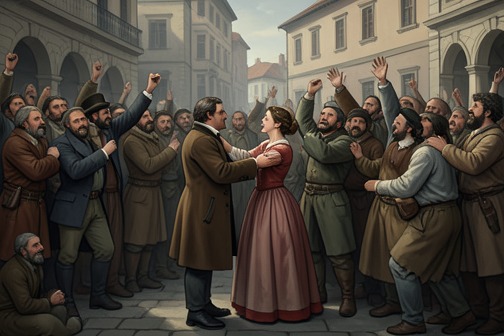
The [2013 scholarship results announcement](entity:event-recall-event-2013-2acd7a193cfd) names [Connell Waldron](entity:character-recall-character-connell-waldron-c068fca7504d) and [Marianne Sheridan](entity:character-recall-character-marianne-sheridan-a36bd5691973) as scholars at [Trinity College Dublin](entity:location-recall-location-trinity-college-dubl-f1417efee6ee), but the award means more than recognition: for [Connell](entity:character-recall-character-connell-537046691930) it changes what he can afford to study, where he can live, and whether postgraduate education is possible. Their shared achievement therefore becomes a measure of unequal need, testing their ideas about meritocracy against the concrete force of money.
## Announcement and Immediate Reactions
The Provost reads the scholarship list from the steps of the Exam Hall. Connell stands with [Helen Brophy](entity:character-recall-character-helen-brophy-cf842d87aa27), who has her arm wrapped around his. When the English scholars are announced, the four names are read alphabetically, with Connell’s last. Helen throws her arms around him. He stays in the square to hear the History and Politics results, and then hears [Marianne](entity:character-recall-character-marianne-bce7426f25b0)’s name as well. Her friends cheer and applaud. Only then does the result fully register: they have both won.
The public ceremony brings different reactions into view. Connell calls [Lorraine](entity:character-recall-character-lorraine-4a3d0ed0f14d), who is quiet with shock before murmuring, “Oh my god, Jesus Christ.” [Niall](entity:character-recall-character-niall-04095e658a4f) and Elaine join him, cheering, slapping his back, and calling him “an absolute fucking nerd.” Connell laughs because the excitement has to find an outward expression and he does not want to cry. The announcement is at once an official list of names and a startling change in what he can imagine doing next.
That evening, the new scholars attend a formal black-tie dinner in the Dining Hall. Connell borrows a tuxedo that does not fit properly and struggles to make conversation with the English professor seated beside him. The scholarship places him among people he has never met, but the ceremony does not make him feel that he belongs with them: he would rather be with Helen and his friends, who know him. Academic recognition brings access and awkwardness together.
## What the Award Makes Possible
The practical consequences are especially large for Connell. Before the scholarship, he expects to work in [Dublin](entity:location-recall-location-d7ee455b2147) over the summer and pay rent with his wages. A week before his exams, his employer cuts his hours; he can just about cover rent but would have no money left to live on. He decides to move out of Niall’s place for the summer. Niall reassures him that the room will be available again in September, but Connell’s immediate circumstances leave him without a way to remain in Dublin.
Connell does not tell Marianne at once that he is losing his ability to pay rent. He knows she would probably let him stay, but asking feels too much like asking her for money. Their silence sits within a wider financial imbalance they have never discussed: Marianne’s mother pays Lorraine to clean the family’s floors and do their laundry, and the money passes indirectly to Connell, who often spends it on Marianne. Marianne also buys him dinners and theatre tickets without keeping account of them. The contrast between the unspoken flow of money in their lives and Connell’s reluctance to ask directly makes the cost of studying in Dublin personal as well as economic.
At a party at Sophie Whelan’s house, Connell sees Marianne in a red swimsuit by the swimming pool and thinks he will explain the rent situation that night. He is afraid of losing her, but after they go to bed and Marianne falls asleep, he cannot wake her to ask. He postpones the conversation until after his last exam. Two days after his paper on Medieval and Renaissance Romance, he tells her that he will have to leave Niall’s place. He does not ask to stay with her. Marianne assumes he will go home, and Connell cannot find a way to turn the conversation into the request he had rehearsed. He leaves her apartment in tears, grieving both the relationship and the possibility of living there. In this period, the absence of financial security has already become a relationship crisis.
The scholarship reverses that precarity. Connell’s rent is paid, his tuition is covered, and he receives a free meal each day in college. He can live in Dublin without thinking about rent for the rest of his degree and can contemplate postgraduate study without tuition costs. What had seemed unavailable becomes materially real: over the summer he travels through Europe, visits cities and galleries, and can spend an afternoon in Vienna looking at Vermeer’s *The Art of Painting* before buying a cheap beer. He describes the award as a vast cruise ship suddenly coming into view, a resource that changes the horizon of his options.
## Merit, Class, and the Meaning of Success
The day after the announcement, Connell and Marianne attend the scholarship swearing-in ceremony in gowns and recite words in Latin. Afterwards, over breakfast at a café near college, Marianne says she is worried about [Peggy](entity:character-recall-character-peggy-68a825115f0d), who is the only one of their three friends not to win a scholarship. Marianne expects the result to hurt Peggy, while Connell’s response is shaped by the fact that Peggy lives at home in Blackrock and has two doctor parents. Peggy does not need subsidised tuition or free campus accommodation. Their difference is not simply over whether the disappointment is real, but over whether the award should be understood primarily as a personal judgment or as material support.
Marianne tells Connell that he deserves the scholarship more because he is a better student, then acknowledges that his financial circumstances also matter. She says the awards should be means-tested. Connell points out that their backgrounds are very different and asks whether she considers him her working-class friend. Marianne says she is conscious that they met because his mother works for her family, and that she does not think her mother pays Lorraine well. Connell answers that she pays her very little. The scholarship discussion draws their personal history into the open: their friendship has never been separate from the employment relationship between their mothers.
Connell is also unsettled by the setting in which the award is celebrated. At the formal dinner, he notices that the students serving the scholars are working to put themselves through college while the recipients eat free food. He finds the contrast disturbing and calls the idea of meritocracy evil. Marianne agrees with his criticism but asks what refusing the money would accomplish. Connell replies that it is easy to find reasons not to act; Marianne retorts that he is not going to give back his own scholarship either. Their exchange does not settle the moral question. Instead, it exposes the gap between condemning an unequal system and deciding what an individual should do when its resources make education possible.
Connell’s discomfort is not only political. He says he feels strange wearing black tie and speaking Latin, and wonders what people from school would think of him at Trinity. Marianne reminds him that he was always concerned about what people at school would say. The remark carries the memory of how he and others treated her then, and how their school relationship operated on his terms. He feels guilty, but concludes that Marianne is more generous and a better person. The scholarship gives Connell access to a new institution while bringing old differences in status, shame, and responsibility into the present.
## Unequal Consequences of a Shared Achievement
For Marianne, the award confirms a sense of herself that she has long held: she is special. For Connell, the result remains harder to absorb as a personal verdict. He does not know whether he deserves to think of himself in the same way. Its clearest meaning is practical: money makes Dublin, travel, art, and further study attainable. The same announcement can therefore affirm Marianne’s self-image and transform Connell’s choices without having the same emotional weight for either of them.
The results also expose a limitation in the language of merit. The award recognizes academic achievement, but what it changes depends on what each student already has. Connell’s need for support is visible in his lost work hours, his inability to cover living costs, and his painful decision to leave the city. The scholarships’ failure to account for means becomes an argument between him and Marianne even as the award itself relieves his immediate financial pressure. His success is not an escape from class inequality so much as an encounter with the resources that make opportunity usable.
That tension continues to shape how the two interpret one another. Marianne sees Connell as the more deserving student and recognizes that he needs the financial support more; Connell sees the award as something that permits him to remain in college and imagine a future he had not regarded as real. The announcement joins their names on one list, but the consequences reveal their unequal starting points. Its decisive significance lies in that double movement: educational recognition opens Connell’s future while making the social conditions behind his access impossible to ignore.
Event 9
Connell is mugged and seeks Marianne's help late at night
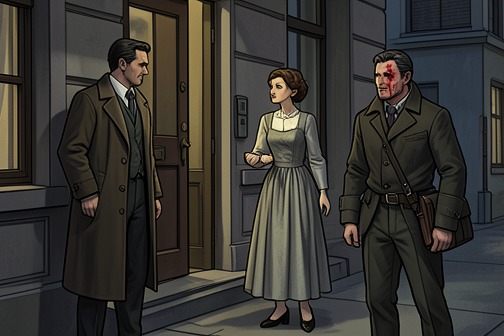
[Connell is mugged and seeks Marianne's help late at night](entity:event-recall-event-connell-marianne-8e3d7b44f0d3) after losing his wallet and phone in Dún Laoghaire. The call brings him to [Marianne](entity:character-recall-character-marianne-bce7426f25b0)’s apartment, where the practical need for help gives way to a painful exchange about their feelings and the misunderstanding that separated them the previous summer. The encounter reveals that care between them persists, even as they remain unable to make their past and present intentions clear to one another.
## The Call and the Journey to Marianne
At Marianne’s gathering, she receives a call from a number she does not recognise and steps away to answer. [Connell](entity:character-recall-character-connell-537046691930) tells her that his wallet, phone, and other belongings have been stolen, and that he is stranded in Dún Laoghaire. He has not been home since exams and is drunk; because he has neither his phone nor money, he reaches out to Marianne, the one person whose number he can remember.
When Marianne meets him outside her building, he has been injured in the robbery. Connell explains that a man demanded his wallet, that he refused for reasons he cannot account for, and that the man then hit him. Looking back, he says he should have handed over the money. He also apologises for calling, while Marianne offers him a choice: he can shower and stay at her apartment, or take cash and go home. Connell leaves the decision to her, making his immediate dependence on her explicit without presuming that he is welcome.
## Care Complicated by Intimacy
Connell’s arrival is not simply a practical emergency. He is drunk enough to joke about his condition and flirt with Marianne; she laughs at the flirtation and reminds him that [Jamie](entity:character-recall-character-jamie-9ab1c29c9c6f) is there. The joking sits beside the vulnerability of his situation: he has been hurt, is far from home, and has called someone with whom intimacy has never become emotionally straightforward.
In the kitchen, Connell asks Marianne whether she loves Jamie. She points out that he has not usually shown interest in her feelings and that she thought such subjects were off-limits between them. Connell then admits that he has been seeing someone for about six weeks: [Helen Brophy](entity:character-recall-character-helen-brophy-cf842d87aa27), a medical student. Marianne is shocked. Connell says that he loves Helen, and Marianne begins to cry. The disclosure makes plain that, while Marianne has been trying to understand her own relationship with Jamie, Connell has already entered a relationship he had not told her about.
## The Previous Summer Reconsidered
Marianne’s immediate response is to tell Connell to leave her alone. He apologises for not telling her about Helen, and she asks him to go. But her hurt does not erase awareness of why he came: when Connell reminds her that he needs money to get home, she recalls that he was assaulted and offers him two fifty-euro notes. Her effort to act like a grown-up is expressed through practical care, even as she is visibly distressed and Connell himself appears close to tears.
Before leaving, Connell says he never understood what had happened between them the previous summer, when he had to move home. He had thought Marianne might let him stay with her. Marianne answers that he had said he wanted them to see other people, so she believed he was ending their relationship; she had not known he wanted to remain with her and says he would have been welcome. The conversation identifies the separation as a misunderstanding rather than a shared decision clearly discussed by both of them. Yet the clarification comes only after Connell has become involved with Helen, and it does not repair the immediate hurt.
## Departure and Concealment
Connell leaves Marianne’s apartment with the money. The door closes quietly, giving the encounter no dramatic resolution: he has received help, and they have finally named part of the misunderstanding between them, but neither offers a way to return to their previous intimacy. The episode ends with separation rather than reconciliation.
The next morning in the Arts Block, Jamie kisses Marianne in front of other people and tells her she looks beautiful. He asks how Connell was the previous night. Marianne grips Jamie’s hand, rolls her eyes conspiratorially, and says Connell was so out of it that she eventually got rid of him. Her public account hides the emotionally charged conversation and the help she gave Connell. The contrast between the private exchange and her breezy explanation shows how the two continue to keep important feelings and facts out of view, even after the night has exposed the cost of their silence.
Event 10
Argument at the Italian dinner and Marianne confides in Connell about abuse
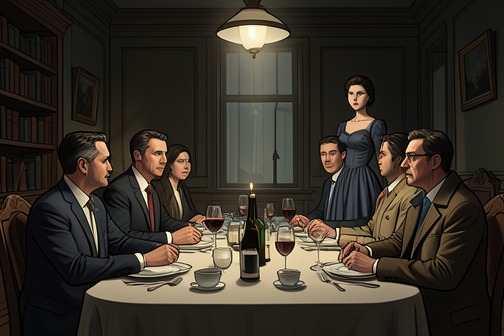
The Italian dinner argument and [Marianne](entity:character-recall-character-marianne-bce7426f25b0)’s subsequent disclosure to [Connell](entity:character-recall-character-connell-537046691930) bring private family abuse into the open at a moment when the couple are close but have not fully understood one another. The evening moves from a public dispute over [Jamie](entity:character-recall-character-jamie-9ab1c29c9c6f)’s conduct to a private account of threats and violence at home; Connell’s intervention separates Marianne from Jamie, but his first response to her disclosure also exposes how little he has understood.
## Causes and Background
The dinner takes place at Marianne’s family holiday home in Italy, where Connell is among the guests. Earlier, he had been planning to work in [Dublin](entity:location-recall-location-d7ee455b2147) through the summer, but reduced hours at his job made it impossible to cover rent and living expenses. He decided he would have to move out of [Niall](entity:character-recall-character-niall-04095e658a4f)’s place, yet delayed telling Marianne because asking to stay in her apartment felt too much like asking her for money. At a party by a swimming pool, he had considered raising the subject but could not bring himself to do so. The unspoken financial dependence is part of the emotional background to the Italian visit: Connell is already afraid of losing Marianne, while their relationship leaves money unspoken even as it shapes his options.
The immediate conflict begins at the dinner table, when Jamie dismisses the prospect of visiting Venice because, he says, it is full of Asian people taking photographs. Niall calls the remark racist. Jamie responds with sarcasm, and the table falls quiet. Marianne abruptly gets up to fetch dessert; Connell is disappointed that she avoids confronting Jamie, but he says nothing. Her withdrawal is not the end of the tension. When the group begins eating strawberries, Jamie asks why the cream was not brought out. Marianne says it is inside and stands to get it. Jamie looks around for someone to validate his complaint, finds the others avoiding his gaze, then follows her into the kitchen after knocking his chair back.
## The Argument in the House
From the table, Connell hears a raised voice and goes inside. He finds Marianne and Jamie at the kitchen counter. Marianne is shivering, while Jamie refills his champagne glass with red wine. When she asks him to put the glass down, he taunts her and drops it, shattering it on the floor. Marianne reacts by lunging toward him as if to strike; Connell steps between them and holds her by the upper arms. Jamie calls her a mental case and says she needs help. Connell does not argue with him. He turns Marianne toward the back door and leads her out, while she offers no resistance.
The movement out of the kitchen gives the scene a stark change in scale: a crowded dinner and a hostile exchange give way to the dark, walled-off part of the garden, where Connell and Marianne can be alone. They walk down the steps and along a line of trees without speaking. Connell holds her until she seems calmer, and their breathing settles into a shared rhythm. He strokes the back of her neck, then releases her. They smoke cigarettes quietly before Marianne asks if she can stay in his room. Connell says the bed is large enough; he does not press her to explain further before they go inside.
## What Marianne Tells Connell
In bed, Connell recognizes that sex could happen between them, but the possibility remains unspoken and he does not act on it. Marianne instead tells him that she does not know why she cannot be like other people or make people love her, and says she thinks something was wrong with her from birth. Connell offers reassurance by saying that her family and friends love her. Marianne answers that he does not know her family, then says they hate her. The exchange shifts the scene from comfort to disclosure: Connell has reached for a reassuring generality, and Marianne reveals that the family he has invoked is a source of harm.
She tells him that during a previous argument at home, [Alan](entity:character-recall-character-alan-e41a9d4c99ac) said she should kill herself because no one would miss her and she had no friends. When Connell asks how her mother reacted, Marianne says [Denise](entity:character-recall-character-denise-829ff5a7cbf3) was there and responded, as she remembers it, by telling Alan not to encourage her. Marianne then describes Alan following her through the house when he is in a bad mood and entering her room regardless of whether she is asleep. She says he sometimes hits her, though less often since she moved away, and identifies the psychological abuse as more demoralizing. These details make clear that the earlier episode is not an isolated disagreement: Marianne describes a continuing pattern of intimidation in the family home, with her mother present during at least one particularly cruel incident but not intervening protectively.
Connell asks why Marianne never told him while they were together. She says she did not want him to think she was damaged and was afraid he would no longer want her. His response is not immediate explanation or a solution: he cries, says he is sorry, and embraces her. The disclosure makes visible both Marianne’s fear of being rejected if known fully and Connell’s prior failure to recognize the extent of her situation. He had thought of her as damaged already, a thought that sharpens his guilt rather than making him feel vindicated.
## Intimacy and Aftermath
After Connell apologizes, they kiss and move toward renewed sexual intimacy, but Marianne stops and draws away. Connell waits until he can speak without his voice breaking, then apologizes again; she squeezes his hand before turning away. The scene therefore does not resolve the disclosure through sex or a declaration of rescue. Physical closeness offers a brief form of comfort, but Marianne retains the ability to set a limit, and Connell is left with regret over how quickly he moved from hearing her pain to initiating intimacy.
The significance of the dinner lies in the contrast between visible conflict and concealed harm. Jamie’s behavior at the meal is witnessed by the group, yet Connell does not see what happens between Jamie and Marianne in the kitchen until the argument has escalated. Marianne’s account of Alan, in turn, explains a family reality that Connell had not known even when he and Marianne were together. The disclosure deepens their understanding without making the harm disappear: Connell can listen, apologize, and hold her, but he cannot undo the family’s conduct or the silence that kept it hidden. The episode joins a public confrontation with a private revelation, turning an evening of strained hospitality into a moment of painful recognition between them.
Event 11
Marianne and Jamie break up, and their social circle shuns her
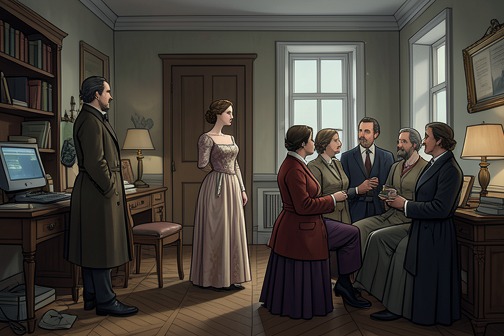
[Marianne and Jamie break up, and their social circle shuns her](entity:event-recall-event-marianne-jamie-9b949b382e6e), marking the collapse of a college life in which she had been admired and envied. [Jamie](entity:character-recall-character-jamie-9ab1c29c9c6f)’s unhappiness becomes public, and friends’ sympathy for him helps turn their shared circle against [Marianne](entity:character-recall-character-marianne-bce7426f25b0). The break reveals how fragile her social standing was: once she is no longer aligned with the group’s expectations, the approval that had seemed to confirm her belonging disappears.
## The breakup and social reversal
Marianne’s departure from the group is not presented as a single dramatic confrontation but as a gradual change in how others treat her. Jamie tells people he is unhappy about the breakup, and they feel sorry for him. Marianne senses the consequences before leaving: eyes turn away when she enters a room, and conversations stop short. Her former footing in the social world gives way quickly. She had been admired and envied; now the same people’s attention makes her feel excluded.
The reversal is striking partly because Marianne had been drawn into the very social economy she once appeared to observe from the outside. At the Debs fundraiser, she watches the other girls from a distance and recognizes how much significance they give to popularity, while remaining unsure what rewards being at the top actually offers. That night she is made to participate rather than simply observe: she sells raffle tickets, makes conversation, and waits for the boys to arrive. Her unease as an awkward intruder anticipates how exposed she will later feel when her place in a group is withdrawn.
Yet exclusion does not remain an unbearable shock. Marianne finds that she can get used to it. The experience sharpens her suspicion that the social forms around her repeatedly reproduce a contest for dominance. At school, boys tried to undermine her through cruelty and disregard; in college, she sees men using sex and popularity in ways that seem to her to serve a similar end. She wonders whether each new stage of life will disclose the same struggle again. This is her interpretation of a pattern, not proof that every person around her acts from one motive, but it helps explain why the loss of status ultimately seems less important to her than the apparent predictability of the contest.
## [Peggy](entity:character-recall-character-peggy-68a825115f0d) and the demand to take sides
Peggy’s response makes the social rupture personal. As Marianne packs to leave, Peggy repeatedly insists that she is Marianne’s best friend and presses her to recognize the drama’s effect on other people. Marianne answers that she may not care about the same things Peggy cares about, but that she does care about Peggy. The distinction does not resolve their disagreement. Peggy wants to know what position the situation leaves her in and says she does not want to take sides; Marianne hears that as a refusal to take her side.
Their exchange shows how friendship itself has become entangled with group allegiance. Peggy says people are upset about the whole drama, while Marianne does not know how to respond to the claim. Peggy’s frustration culminates in a suggestion that Marianne see a therapist. Marianne does not understand why her lack of visible upset should be treated as evidence that she needs help. At the same time, the suggestion is difficult for her to dismiss: she has heard from different people throughout her life that she is mentally unwell and needs help. The breakup therefore leaves her not only socially isolated but also uncertain whether her different response to conflict is being judged as a personal failing.
## [Joanna](entity:character-recall-character-joanna-3d81f486abc1)’s account of the group
Joanna is the only person from the wider circle who continues to keep in touch. Their Skype conversations concern coursework, films, and articles Joanna is writing for the student paper. When Marianne asks whether Joanna sees Peggy, Joanna briefly winces and says she sees none of those people; they know she was on Marianne’s side. Joanna explains that she was never really friends with the others and had got on with Marianne, while Jamie and Peggy were not people she considered particularly good.
Joanna’s perspective complicates Marianne’s loss. Marianne had thought of the group as a set of friends, but Joanna says they were more Marianne’s friends than hers. Marianne admits she may have been caught up in how much they seemed to like her. Joanna suggests that Marianne had recognized their obnoxiousness but found it easier to overlook because their approval felt valuable. The conversation does not restore the old circle, but it gives Marianne another account of what that circle was: not a stable community she has suddenly lost, but a status-conscious group whose apparent affection had helped draw her into exchanges she now regrets.
## Distance, correspondence, and aftermath
By the time Marianne is in Sweden, she is no longer in regular contact with Peggy, Sophie, Teresa, and the others. She has also left Jamie, and the group’s distancing follows her into the period abroad. In [Lund](entity:location-recall-location-lund-86b077ba7d89) she is staying with [Lukas](entity:character-recall-character-lukas-f2b1167442c4), and her life there includes a distressing dynamic she experiences as a “game”; the social estrangement is part of a wider period in which she feels detached from other people and from ordinary sources of connection. The end of the college circle should not be mistaken for liberation from every difficulty.
The book also sets Marianne’s isolation beside other forms of communication that continue across distance. During the summer, [Connell](entity:character-recall-character-connell-537046691930) writes her lengthy emails while travelling with [Niall](entity:character-recall-character-niall-04095e658a4f) and Elaine. He drafts and revises them in spare moments, sometimes losing hours to the work, and finds that writing to her feels more fundamental than a casual exchange. Their correspondence includes news links and accounts of what they are reading and thinking. These emails do not undo Marianne’s exclusion from her former friends, but they show that the collapse of one social attachment does not eliminate her capacity for sustained, meaningful connection.
## Meaning of the rupture
Marianne’s response to the breakup and its social aftermath resists a simple story of either triumph or devastation. She is hurt by the group’s withdrawal and recognizes how quickly admiration has vanished, yet she also adapts to being excluded. Her later reflections acknowledge her own participation: she had been pleased that people liked her and had treated the group’s approval as evidence of shared values. Joanna’s frankness helps her see that she may have mistaken popularity for friendship.
The episode therefore turns on a change in the terms of belonging. Marianne loses a place in a circle that had offered visibility and status, but the loss also exposes the conditional character of that acceptance and prompts her to question what she had wanted from it. She does not emerge with an easy replacement community or a settled account of herself. Instead, the rupture leaves her more alert to the difference between being admired, being included, and being known.
Event 12
Marianne goes to Sweden on an exchange year
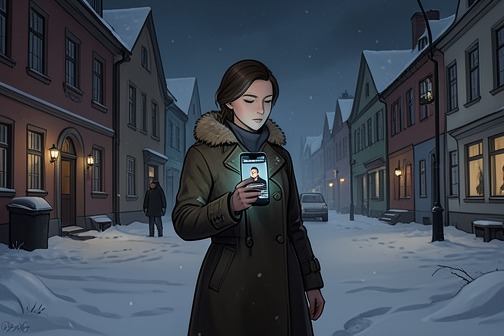
[Marianne goes to Sweden on an exchange year](entity:event-recall-event-marianne-c6f207ee0187), a separation that changes the terms of her friendship with [Connell](entity:character-recall-character-connell-537046691930) without ending it. In [Lund](entity:location-recall-location-lund-86b077ba7d89), she moves through a life increasingly marked by emotional detachment, while email and video calls keep her connected to Connell and to a shared history; the same year also finds him grieving [Rob](entity:character-recall-character-rob-2c4f1be85baf) and struggling with isolation in [Dublin](entity:location-recall-location-d7ee455b2147).
## The decision and its meaning
By the time Connell visits [Marianne](entity:character-recall-character-marianne-bce7426f25b0) at her family’s holiday home in Italy, she has accepted an offer to spend her third year of college in Sweden. She will leave in September, and depending on their [Christmas](entity:time-recall-time-christmas-a573265d0167) plans, they may not see each other again until June. Until then, Connell has looked forward to an intense exchange of emails; facing her in person, he realizes that he will miss her. The shift matters because the impending separation makes his attachment newly immediate, even as he remains uncertain about what friends are allowed to feel for one another.
Their recent emails have revealed a difference in how each understands their friendship. Marianne describes her feelings through her continuing interest in Connell’s opinions, beliefs, and life; Connell describes his through identification, sympathy, and the impulse to suffer with her when she suffers. When she suggests that gender roles may shape the difference, he answers that he simply likes her as a person. The prospect of Sweden therefore arrives inside a friendship already sustained by close attention but not settled into a straightforward definition.
## Keeping in touch across distance
During a summer trip through European cities with [Niall](entity:character-recall-character-niall-04095e658a4f) and Elaine, Connell establishes a routine of communication: he calls Helen on Skype, sends [Lorraine](entity:character-recall-character-lorraine-4a3d0ed0f14d) a free text, and writes to Marianne by email. The contrast between these channels is revealing. The calls with Helen give Connell reassurance and a sense of social belonging; his emails to Marianne become lengthy, carefully revised pieces of writing that absorb him for hours. He drafts them while waiting for laundry or lying awake in hostels, rearranging clauses until the sentences feel right.
The emails do more than report where Connell has been. He writes about city scenes, including emerging from the U-Bahn at Schönleinstraße into darkness, with trees overhead and the sounds and smells of the street around him. He describes the experience of writing as a way to hold an experience in words. Marianne, meanwhile, writes from the house near Trieste about her surroundings, feelings, reading, and thoughts. Their correspondence makes each a continuing audience for the other, but it does not eliminate the distance or make their relationship easier to name.
The exchange also gives their digital intimacy a distinctly modern vulnerability. As they follow the Edward Snowden story by email, the two recognize the irony that their communications pass through technologies associated with surveillance. Marianne jokes that an imagined NSA reader may misunderstand their relationship, missing, among other things, the history of Connell not inviting her to the Debs. Their private correspondence thus connects them while also making privacy itself part of what they think about.
## Life in Sweden
In Sweden, Marianne’s experience of the outside world becomes increasingly detached. Before visiting [Lukas](entity:character-recall-character-lukas-f2b1167442c4)’s studio, she describes herself as moving within a protective film: what happens around her seems not to reach her inner self. She is unsure whether Lukas’s remark that she is early is meant to expose eagerness, but finds that she does not care how eager she appears. The moment conveys not newfound confidence so much as an absence of emotional investment in how she is read.
Her arrangement with Lukas, which he calls “the game,” imposes rules on her behavior and continues beyond sex until she is allowed to shower. He insults her, and Marianne recognizes a troubling separation between what she may desire and what she wants. The relief she experiences is short-lived and followed by sickness, while afterward she feels deeply depressed and without ownership of her body. The account places this arrangement alongside her broader detachment rather than treating it as a simple expression of preference.
That detachment reaches into ordinary bodily life. People can seem like colored paper shapes rather than real presences; an encounter with a bus conductor or someone asking for change briefly reminds Marianne that she is visible and living among others. The realization brings fleeting desires—to eat and drink, to speak Swedish, to swim or dance—but they quickly fade. In Lund, she is rarely hungry, and although she fills a plastic Evian bottle each morning, she empties most of it into the sink at night. These details show how the exchange year’s dislocation is registered not only in her thoughts but in diminished engagement with everyday needs.
## Connell’s parallel year
Distance coincides with a crisis in Connell’s life. In January, he receives a group message from Rachel asking whether anyone has seen Rob; the next day Rob’s body is recovered from the River Corrib. Connell had not been in regular contact with Rob and later learns from others that Rob had been drinking heavily and seemed unlike himself. Looking back at his messages, Connell finds that Rob’s last message to him dates from early 2012, a crude comment about a photograph of Connell with Teresa. Connell never replied and cannot bring Rob’s face clearly to mind.
Rob’s death deepens Connell’s anxiety into severe distress, with panic attacks and episodes in which the world feels unreal. When he attends a university counselling session, he tells [Yvonne](entity:character-recall-character-yvonne-3d00d3f7e6d0) that he feels guilty for not keeping in touch and for leaving Rob’s last message unanswered. The [Beck Depression Inventory](entity:object-recall-object-beck-depression-invent-972fcdd978b0) gives a score of forty-three, which Yvonne identifies as indicating very serious depression, and she recommends that he speak with a doctor about possible medication. His bereavement therefore develops alongside an urgent need for support, rather than being resolved by the passage of time.
In that conversation, Connell identifies Marianne as someone close to him, although she is away on Erasmus. They speak on Skype almost every night, but have not discussed what happened in Italy. He is grateful that she has not raised it. He describes her as exceptionally intelligent and says that they see the world in a similar way; he also tells Yvonne that he struggles to find people with whom he clicks. Their contact is a source of support, but its limits remain evident: they can speak regularly without addressing the relationship’s unresolved history or the particular events Connell is avoiding.
## Significance of the separation
The exchange year places parallel pressures on their connection. Marianne leaves familiar surroundings at a moment when social relationships have already become precarious: after her breakup with [Jamie](entity:character-recall-character-jamie-9ab1c29c9c6f), friends begin turning away, and she senses how quickly admiration and envy have given way to exclusion. In Sweden, the separation from that circle does not automatically bring freedom from pain; her relationships, self-perception, and capacity to care for herself remain unsettled.
For Connell, the year brings grief, depression, and a renewed awareness of how few people he feels close to. Yet the emails and nightly calls prevent separation from becoming silence. Their communications carry attention, descriptions, and concern, while also preserving the questions they do not answer. Sweden is thus not a simple escape or a romantic resolution: it is a period in which distance sustains Marianne and Connell’s bond even as both confront forms of loneliness that the bond alone cannot remove.
Event 13
Marianne ends the “game” with Lukas

[Marianne ends the “game” with Lukas](entity:event-recall-event-marianne-lukas-2e7cd96de395) when a photo session in his [Lund](entity:location-recall-location-lund-86b077ba7d89) studio shifts from a familiar arrangement into an act of coercion. The decisive change comes when he frames his treatment of her as love: she rejects that claim, insists on her freedom, and leaves. The scene marks both an immediate break with [Lukas](entity:character-recall-character-lukas-f2b1167442c4) and a sharp exposure of the difference between artistic performance and ethical responsibility.
## Background and terms of the arrangement
For several weeks, [Marianne](entity:character-recall-character-marianne-bce7426f25b0) and Lukas have followed rules he calls “the game.” She is not permitted to speak or make eye contact during it, and if she breaks a rule he punishes her later. The arrangement continues beyond sex: Lukas decides when it ends, and sometimes delays letting Marianne shower while he talks to her. His degrading remarks leave her caught between a desire to hear them and an awareness that desire does not mean she wants what is happening. The relief she experiences is brief; afterward she feels deeply depressed and detached from ownership of her body.
The arrangement develops within a wider atmosphere of disconnection. Since arriving in Sweden, and especially since the game began, Marianne has sometimes experienced other people as unreal, like coloured paper shapes. Brief encounters with strangers can restore her awareness that she is visible and living among others, but the feeling fades. She is rarely hungry in Lund and, despite filling a water bottle each morning, pours most of it away at night. This context makes the studio scene more than a single disagreement: it interrupts a sustained pattern in which her needs and sense of agency have been receding.
## The photo session turns
On the day Marianne leaves, Lukas is preparing to photograph her in his studio. After she removes her bra at his direction, he takes pictures and adjusts the camera on its tripod. He then brings out a coil of thick black ribbon. Marianne understands what he intends and tells him not to start; he proceeds to bind her wrists for the photographs. The camera’s position and the ribbon make the session a controlled performance, but her discomfort is not part of a mutually understood artistic collaboration.
When Lukas takes out more ribbon, Marianne says she does not want to continue. He acknowledges this, but does not stop. She draws back from his touch; he puts a hand around her throat, then uses the ribbon as a blindfold. Marianne becomes too exhausted to speak or move, and her ability to resist narrows. The scene’s value turns at this point: what had been presented as a rule-governed arrangement becomes unmistakably an exercise of control, with Lukas proceeding despite her stated refusal.
## The break and Marianne’s departure
Lukas touches Marianne’s cheek and says that he loves her and knows she loves him. That declaration changes the meaning of the encounter for her. Horrified, she pulls away, demands that he untie her, and threatens to call the police. Lukas begins undoing the bindings when he senses that the mood has changed. Once her arms are free, Marianne removes the blindfold, pulls on her sweater, retrieves her bra, and gets her boots on.
Lukas asks why she is acting this way and what he has done. Marianne tells him to get away from her and never speak to her like that again. When he tries to explain his conduct as an artistic technique, she challenges the explanation; he then praises her as a gifted writer. She laughs in shock and makes her position explicit: she feels nothing for him. Lukas turns back to his camera as if to conceal his expression, while Marianne gathers her things and leaves the apartment. Her departure ends the arrangement not by negotiating new rules, but by withdrawing from it altogether.
## Significance and aftermath
The episode exposes the inadequacy of Lukas’s aesthetic language as a defence of his actions. He is highly sensitive to perceived failures of taste in art, yet Marianne has already recognized that artistic discernment has not given him a developed sense of right and wrong. His claim that the abuse expresses love makes that contradiction personal: he appears able to treat violence and affection as compatible, while Marianne refuses his account of their relationship.
The ending is a concrete act of self-protection after a prolonged retreat into compliance and numbness. Marianne’s threat to call the police, her demand to be untied, and her insistence that Lukas leave her alone restore a boundary that the “game” had repeatedly displaced. Outside, she walks away as snow continues to fall. The scene closes not with reconciliation or a redefinition of the rules, but with separation: she leaves the studio and rejects both Lukas’s control and his claim to know what she feels.
Event 14
Rob Hegarty’s suicide
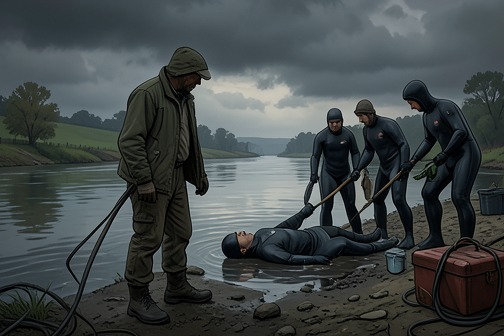
[Rob Hegarty’s suicide](entity:event-recall-event-rob-hegarty-ad22e93784b4) is an offstage death whose consequences arrive through messages, memories, and the lives of those left behind. The news exposes the distance that had opened between [Rob](entity:character-recall-character-rob-2c4f1be85baf) and [Connell](entity:character-recall-character-connell-537046691930), deepens Connell’s depression and self-reproach, and complicates [Marianne](entity:character-recall-character-marianne-bce7426f25b0)’s recollection of a boy who had hurt her.
## The Message and the Discovery
A few days into the new year, at two in the morning, Connell receives a group message from [Rachel Moran](entity:character-recall-character-rachel-moran-cf8d8d4674ed) asking whether anyone has seen or been in contact with Rob. Connell is returning from a night out with Helen. When Helen asks what the text says, he tells her it is nothing, just a group message, and wishes her a happy New Year. The following day, Rob’s body is recovered from the River Corrib. The narrative gives no account of the suicide itself; its first details are the uncertainty of the late-night message and the blunt finality of the recovery.
Friends later tell Connell that Rob had been drinking heavily in the preceding weeks and had seemed out of sorts. Connell had not known: he had been away from home for much of the previous term and had not really been seeing people. He had not seen Rob at [Christmas](entity:time-recall-time-christmas-a573265d0167) and could not remember for certain whether they had met the previous summer. The news therefore brings not only loss but a belated recognition of how little Connell knew about his friend’s recent life.
## Connell’s Guilt and Distress
Looking through Facebook, Connell finds Rob’s last message to him, from early 2012: a photograph from a night out showing Connell with his arm around the waist of Marianne’s friend Teresa, accompanied by a crude question about whether Connell was sleeping with her and a joking congratulation. Connell never replied. The message is an ordinary remnant of their earlier contact, but after Rob’s death its unanswered status becomes charged with regret. Connell cannot even recover a stable mental image of Rob: the face appears whole at first, then its features blur and drift apart when he tries to inspect it closely.
In the days after the death, school friends post messages about suicide awareness. Connell’s own mental state deteriorates week by week. Anxiety that had previously been chronic but low-level becomes severe: his hands tingle during minor interactions such as ordering coffee or answering a question in class. Once or twice he experiences major panic attacks, with hyperventilation, chest pain, and pins and needles throughout his body. He also feels dissociated from his senses; the world seems slower, artificial, and unreal, and he fears that his ability to make sense of it has permanently collapsed. The episodes pass within minutes, leaving him sweating on his mattress, but their recurrence marks a significant worsening of his distress.
When Connell speaks to [Yvonne](entity:character-recall-character-yvonne-3d00d3f7e6d0) at the university, he identifies the suicide as the beginning of his current decline and says he feels guilty for not keeping in touch. He dwells on the unanswered message, though it was sent years earlier, and feels he missed a chance to help someone who was suffering. Yvonne tells him that Rob’s decisions were not Connell’s responsibility, while recognizing how painful it is to imagine a missed opportunity. Connell’s reply that other people at least tried to help comes out more aggressively or pleadingly than he intends, revealing how readily grief turns into comparison and self-accusation.
The assessment gives that distress a concrete measure: Connell scores forty-three on the [Beck Depression Inventory](entity:object-recall-object-beck-depression-invent-972fcdd978b0). Yvonne describes this as the territory of very serious depression and notes his negative feelings toward himself and suicidal thoughts. The novel thus connects Rob’s death not to a single moment of sadness but to an ongoing deterioration in Connell’s everyday functioning and sense of reality.
## Marianne’s Memory of Rob
Rob’s death also changes how Marianne revisits his place in her school years. After the funeral, people describe him as full of life and a devoted son, but Marianne remembers the insecurity and hunger for popularity that could make him cruel. She recalls [Eric](entity:character-recall-character-eric-7ec3f96e28e6) calling her flat-chested in front of others while Rob laughed and whispered to him, possibly adding an insult. Rob’s death does not erase the harm he participated in, and Marianne resists treating public affection for the dead as a complete account of who he was.
In the weeks after the funeral, Marianne scrolls through Rob’s Facebook page and feels anger at classmates’ messages to him. She questions what it means to write on the wall of someone who is dead, or whether liking such a message counts as the proper gesture. Looking back, she recognizes that the mourners had done nothing wrong: grief made ordinary behavior feel pointless because, to her then, nothing else made sense either. She wishes she could have forgiven Rob, even if forgiveness could no longer reach him. His face returns to her hidden or turning away, and his absence leaves her with questions that no one can answer.
## Aftermath and Significance
The death does not produce a simple division between the guilty and the innocent, or between a beloved public figure and a cruel schoolboy. Connell’s remorse attaches itself to an unanswered message and years of lost contact, even as he is told that he could not control Rob’s decisions. Marianne’s memories preserve the injury Rob caused alongside the grief surrounding his death. Together, their responses show how mourning keeps the dead present through digital traces, uncertain recollections, and unresolved judgments, without making those traces a complete explanation of the person who died.
Event 15
Rob Hegarty’s funeral
[Rob Hegarty’s funeral](entity:event-recall-event-rob-hegarty-d696b9e7ad49) brings [Connell](entity:character-recall-character-connell-537046691930) back to [Carricklea](entity:location-recall-location-carricklea-95719fd7e6e1) after [Rob](entity:character-recall-character-rob-2c4f1be85baf)’s body is recovered from the River Corrib, confronting him with the friendship he had allowed to fade and the life he had left behind. The day’s rituals give grief a public form, but Connell experiences it through guilt, anxiety, and a charged reunion with [Marianne](entity:character-recall-character-marianne-bce7426f25b0). In the weeks that follow, the funeral’s emotional consequences reach into his relationship with Helen, which ends amid an argument about Marianne and Connell’s difficulty expressing what he feels.
## Causes and Background
A few days into the new year, Connell receives a late-night group message from [Rachel Moran](entity:character-recall-character-rachel-moran-cf8d8d4674ed) asking whether anyone has seen or heard from Rob. Connell is returning from a night out with Helen and tells her the message is nothing important. The next day, Rob’s body is recovered from the River Corrib. Connell later hears that Rob had been drinking heavily and seemed unlike himself in the weeks before his death, but Connell had not known: he had spent little time at home during term and had not been keeping up with people from school.
Looking through Facebook, Connell finds that Rob’s last message to him dates from early 2012. It accompanies a photograph of Connell with Teresa, a friend of Marianne, and Connell never replied. He had not seen Rob at [Christmas](entity:time-recall-time-christmas-a573265d0167) and cannot remember whether they met the previous summer. When he tries to picture Rob clearly, the image will not hold together. These gaps in contact and memory become part of the loss: Connell grieves not only a friend who has died, but also the ordinary opportunities for conversation that had passed while Rob was still alive.
## The Ceremony and Reunion
Helen comes with Connell to Carricklea for the funeral. On the morning of the ceremony, they dress together in his room while [Lorraine](entity:character-recall-character-lorraine-4a3d0ed0f14d)’s hairdryer can be heard through the wall. Connell wears the only suit he owns, bought for a cousin’s communion when he was sixteen, and is preoccupied by how tight the jacket feels across his shoulders. Helen tells him he looks handsome; he reacts with unexpected anger and does not answer.
At the church entrance, Connell sees Marianne, who has returned from Sweden for the funeral. He has not seen her since Italy. They embrace, and Connell holds her tightly before they separate in front of the people gathered in the vestibule. The reunion is brief, but it sharpens the contrast between the last time they met, when Rob was still alive, and the present, when Connell is painfully aware that he could once have contacted his friend.
The family’s grief makes the ceremony difficult for Connell to endure. As he and the others join the line to offer condolences, he hears Rob’s mother, Eileen, crying. By the time he reaches Rob’s father, Val, Connell’s legs are shaking and his hands are wet. He apologizes, and Val thanks him for coming. Afterward, Connell sits in a pew, shivering. Lorraine gives him a tissue and reassures him that he has done what he needed to do; Helen sits beside him, looking self-conscious.
## The Wake and Rob’s Memory
After Mass and the burial, the mourners gather at the Tavern for sandwiches and tea in the ballroom. Connell and Helen stand by the tea trays without much conversation until [Eric](entity:character-recall-character-eric-7ec3f96e28e6) joins them. Eric asks whether Helen is Connell’s girlfriend and jokes that she may be the reason Connell rarely comes home. Connell answers that this is his own fault. When Marianne arrives, she exchanges easy, familiar remarks with Eric and Helen. Connell watches her move naturally through the conversation and feels struck by the ease that once seemed foreign to her at school, when he had been the one who understood how to behave.
The funeral also brings back memories that complicate Connell’s grief. He recalls Rob rushing onto the football pitch to embrace him after Connell scored a goal, even though the match was still in progress. In their school life, emotion had generally been constrained; the football match offered one of the few settings where open displays of affection and tears seemed permissible. Connell remembers Rob’s exuberant embrace as evidence of a closeness that existed alongside the distance that later grew between them.
Connell also remembers Rob’s investment in popularity and social standing, including the way he joined in when Marianne was bullied at school. Rob could be cruel in his pursuit of approval, and Connell recognizes that he too had once prioritized being accepted and concealing what made him feel ashamed or uncertain. This recognition does not cancel his affection for Rob or turn the past into a simple judgment. Connell remembers that Marianne had helped him see other possibilities, and the contrast makes the old pressures of school life newly visible.
## Grief and Aftermath
At the funeral, Connell’s thoughts repeatedly return to what might have been done before Rob died. In a later counselling session with [Yvonne](entity:character-recall-character-yvonne-3d00d3f7e6d0), he describes feeling guilty that he was not more in touch with Rob and that he never answered the old message. Yvonne tells him that Rob’s decisions were not Connell’s responsibility, while acknowledging how painful it can be to feel that an opportunity to help someone was missed. Connell remains troubled by the fact that other people had tried to help when he had not been present.
Marianne’s later reflections add another view of Rob’s legacy. She remembers the bullying, including an insult from Eric and Rob’s participation, and considers how cruelty can damage the person who inflicts it as well as the person targeted. After the funeral, she scrolls through messages left on Rob’s Facebook page and feels anger at the public display of grief; with time, she recognizes that the mourners were simply grieving in ways she could not then understand. She wishes she could have forgiven Rob, while acknowledging that he is no longer there to answer the questions she has about who he was.
The funeral also exposes a strain between Connell and Helen. That night, in Connell’s room, Helen asks why he had not introduced her to his friends. Connell points out that he introduced her to Eric, but Helen says it happened only because Eric asked and that Connell did not seem to want them to meet. Their disagreement turns to Marianne: Helen believes Connell was glad to see her and had looked at her in the church. Connell admits he was glad to see Marianne, but resents that the argument has become about her when their friend has just died. Two weeks later, [Connell and Helen break up](entity:event-recall-event-connell-helen-0e320aa21498). By then, he is exhausted and emotionally numb, even as crying and panic attacks continue to overtake him. The funeral therefore marks not a resolution of grief, but a point at which bereavement, old attachment, and present-day isolation converge.
Event 16
Connell and Helen break up

[Connell and Helen break up](entity:event-recall-event-connell-helen-0e320aa21498) two weeks after [Rob Hegarty’s funeral](entity:event-recall-event-rob-hegarty-d696b9e7ad49), where grief and an argument about [Marianne](entity:character-recall-character-marianne-bce7426f25b0) bring their existing strain into the open. The separation is not presented as a simple consequence of one dispute: [Connell](entity:character-recall-character-connell-537046691930) is grieving, increasingly unwell, and unable to engage with the conflict, while Helen interprets his attention to Marianne as evidence of distance between them.
## Background and Grief
A few days into the new year, Connell received a late-night group message from [Rachel Moran](entity:character-recall-character-rachel-moran-cf8d8d4674ed) asking whether anyone had seen or heard from [Rob](entity:character-recall-character-rob-2c4f1be85baf). Connell was returning from a night out with Helen. When she asked what the message said, he dismissed it as an ordinary group message and wished her a happy New Year. Rob’s body was recovered from the River Corrib the following day.
Connell later learned that Rob had been drinking heavily and seemed unlike himself in the weeks before his death. Connell had not known: he had spent little time at home the previous term and had not been seeing his school friends. Looking through Facebook, he found Rob’s last message to him, sent years earlier with a photograph from a night out. Connell had never replied. He had not seen Rob at [Christmas](entity:time-recall-time-christmas-a573265d0167) and could not remember for certain whether they had met the previous summer. When he tried to picture Rob, the image would not hold its features clearly.
At his first university counselling session, Connell told [Yvonne](entity:character-recall-character-yvonne-3d00d3f7e6d0) that he felt guilty for not keeping in touch and for never answering Rob’s final message. Yvonne told him that Rob’s death was not his fault, but Connell answered that other people had at least tried to help. His guilt sits beside the gaps in his memory and contact: the friendship had receded from his daily life, but its unfinished messages and missed occasions acquired new weight after Rob’s death.
## The Funeral and the Argument
Connell attended the funeral with Helen. Marianne was there too, having returned from Sweden. Connell was struck by how naturally she moved through the encounter, a contrast with their school years, when he had understood how to behave and she had been treated as someone who aggravated others. After the funeral, Connell cried, but the crying felt detached from any sense of relief.
The funeral also returned him to memories of his friendship with Rob. He remembered Rob exuberantly embracing him after a school football goal, when their feelings could find expression in the exceptional permission of a match. He remembered, too, Rob showing the boys photographs of Lisa’s naked body on Debs night. Connell understood Rob as deeply invested in others’ approval and willing to betray kindness or confidence for social acceptance. He did not treat that weakness as wholly foreign to himself: he had also wanted to appear normal and conceal what he found shameful or confusing. He credited Marianne with showing him that other ways of living were possible.
That night, Connell and Helen lay awake in his room. Helen asked why he had not introduced her to more of his friends. Connell pointed out that she had met [Eric](entity:character-recall-character-eric-7ec3f96e28e6), but Helen felt he had not genuinely wanted his friends to meet her. Connell answered that a funeral was a poor setting for introductions and, exhausted by the occasion, said he was sorry he had asked her to come. He tried to clarify that he had meant he had given her the wrong impression about what the day would be like, not that he regretted her presence.
Helen then accused him of paying particular attention to Marianne in the church. Connell denied intentionally staring, but admitted he had been glad to see her. He protested that every argument seemed to return to Marianne and objected that Helen was raising their relationship while their friend’s death was still immediate. Helen replied that she had noticed him looking at another woman. Connell said that his manner with Marianne was simply his normal personality; the exchange left the difference between them unresolved.
## Separation and Aftermath
Helen eventually lay back down beside Connell without resolving the argument. Two weeks later, they broke up. By then Connell was so depleted that he could barely respond. His distress came in crying fits and panic attacks, yet it felt as if it arrived from outside him; the narration contrasts the emotions he was outwardly expressing with an internal numbness.
The separation unfolds within the worsening aftermath of Rob’s death. Connell’s anxiety, previously a chronic but low-level inhibition, had become severe, with panic attacks and episodes in which his surroundings seemed unreal. At counselling, he later received a score of forty-three on the [Beck Depression Inventory](entity:object-recall-object-beck-depression-invent-972fcdd978b0), which Yvonne identified as indicating very serious depression. The breakup therefore coincides with a broader collapse in Connell’s emotional capacity, rather than offering a clean resolution to the funeral dispute.
## Significance
The event connects bereavement to the vulnerabilities in Connell and Helen’s relationship. Their argument concerns Marianne, but it occurs in the wake of Rob’s death and amid Connell’s sense that he failed to maintain contact with an old friend. His attention to Marianne also carries a history: she had helped him imagine alternatives to the self-concealment he shared, in a different form, with Rob. Helen sees the visible intimacy of that connection; Connell, overwhelmed by grief, experiences her accusation as a return to an old conflict at a moment when he can scarcely manage the present one.
The funeral thus becomes both a site of mourning and a turning point in Connell and Helen’s relationship. The breakup follows not a decisive reconciliation or confrontation, but an argument that neither can settle while Connell is becoming increasingly isolated and numb. Rob’s absence continues to shape the living: through Connell’s guilt, through the memories Marianne also carries, and through the strained conversations that follow the funeral.
Event 17
Connell’s first university counselling session
[Connell’s first university counselling session](entity:event-recall-event-connell-a46c0e543800) is the point at which his deteriorating mental health becomes both speakable and formally recognizable. After [Rob Hegarty’s suicide](entity:event-recall-event-rob-hegarty-ad22e93784b4), [Connell](entity:character-recall-character-connell-537046691930)’s anxiety intensifies into panic attacks and his sense of isolation deepens; during the meeting with [Yvonne](entity:character-recall-character-yvonne-3d00d3f7e6d0), he connects that decline to guilt over [Rob](entity:character-recall-character-rob-2c4f1be85baf), estrangement from his old life, and his difficulty finding people with whom he feels at ease. The session does not resolve those losses, but turns them into concerns that can be acknowledged and addressed.
## Background and decision to seek help
Connell attends the university counselling service after [Niall](entity:character-recall-character-niall-04095e658a4f) recommends it on practical grounds: it is free. He has been living in scholarship accommodation and seeing little of other people. His distress is already affecting ordinary activity: the previous night, too tired to get from his en suite to his bed, he lay on his room’s floor for an hour and a half. The episode captures the inertia of his depression without making it a dramatic revelation; even the short distance between two visible places feels impossible to cross.
The waiting-room questionnaire gives that private condition a form. One item asks about pessimism, and Connell recognizes himself in the most hopeless statement, but circles a less severe answer because he does not want to alarm the person who will receive the form. He similarly hesitates to disclose the extent of his suicidal thoughts to a stranger. His answers therefore record both his suffering and his effort to contain what he reveals. When he hands over the completed pages, their intensely personal contents feel exposed, although the receptionist receives them matter-of-factly and asks him to wait for the counsellor.
## Rob’s death and Connell’s worsening distress
Yvonne asks when Connell began feeling unwell. He places the change in January, after Rob’s death. A few days into the new year, at two in the morning, Connell received a group message asking whether anyone had seen Rob. He was returning from a night out with Helen, and, when Helen asked about the message, he brushed it off. Rob’s body was recovered from the River Corrib the next day. The contrast between the message’s immediate uncertainty and the confirmed death that followed gives the loss a sudden, irreversible shape.
Connell later learns that Rob had been drinking heavily and seemed out of sorts, but Connell had not known: he had spent little time at home and had not been keeping up with people. Checking his old messages, he finds Rob’s last message to him, sent in early 2012, and realizes that he never replied. Nor can he recall with certainty when he last saw Rob. When he tries to summon Rob’s face, the image initially seems recognizable but will not hold its features. The old message and failing memory become concrete points around which his guilt gathers: he feels that he was absent and missed an opportunity to help, though he could not have known what was happening.
Since the death, Connell’s previously chronic, low-level anxiety has grown severe. Minor social interactions can make his hands tingle; he has also experienced major panic attacks involving hyperventilation, chest pain, and pins and needles, accompanied by a temporary sense that his surroundings have become unreal. The episodes pass, but their intensity frightens him. In the counselling room he tells Yvonne that a friend from school died by suicide and that he feels guilty for not having been in touch. She tells him that Rob’s death was not his responsibility and that it is common for people bereaved by suicide to wonder whether they could have done something. Connell remains focused on the unanswered message and on the possibility that he failed to help.
## Assessment and response
The inventory makes the severity of Connell’s distress measurable. Yvonne explains that the [Beck Depression Inventory](entity:object-recall-object-beck-depression-invent-972fcdd978b0) assigns a score from zero to three for each item. She contrasts the low scores expected from someone without depression and the higher range associated with a mild depressive episode with Connell’s score of forty-three, which she identifies as indicating very serious depression. Asked whether that description fits his experience, he quietly agrees. The number gives institutional weight to what he has been reluctant to disclose, including his negative feelings about himself and suicidal thoughts.
Yvonne recommends that Connell speak with a doctor at the college health service about the possibility of medication, while clarifying that she cannot prescribe it herself. She also asks about his family and whether he has a partner. Connell says he has no girlfriend or boyfriend. When she asks whether he has anyone nearby with whom he can talk, he names Niall, who directed him to the service, and [Marianne](entity:character-recall-character-marianne-bce7426f25b0), who is away on an Erasmus exchange. The answers show that support exists, but is limited by distance and by how difficult Connell finds it to feel close to people.
## Isolation, belonging, and the losses behind it
Connell describes Marianne as someone who knew Rob and with whom he speaks often by Skype. He says she has been supportive, is highly intelligent, and sees the world in a way similar to his. Their conversations offer connection across distance, although they have not discussed what happened in Italy. He also says that he has few people with whom he genuinely clicks. This difficulty is familiar from school, where he sometimes felt isolated even while other people liked him; at Trinity, he feels less liked and less at home.
That sense of displacement is sharpened by his account of class and social life at Trinity. Connell had imagined that moving from [Carricklea](entity:location-recall-location-carricklea-95719fd7e6e1) would let him find a different life and perhaps more like-minded people. Instead, he says, students around him compare how much money their parents make, and he finds the people there worse than those he knew at school. He has little contact with Niall and lives apart from the social world he once shared with Rob and other school friends. The move meant as a chance to belong elsewhere has become, in his telling, a separation from both places: he hates being at Trinity and believes the friendships in Carricklea are gone. Rob’s death makes the old life not merely distant but unrecoverable.
When Connell reaches this thought, he begins to cry. Yvonne moves a box of tissues toward him; he takes one, wipes his face, and apologizes. His response is notable for how uncertain he remains that he has been understood, even as he has managed to say more than he intended. The scene holds together the need to speak and his doubt about whether speaking will create real connection.
## Practical help and continuing grief
Yvonne explains that counselling can work on feelings, thoughts, and behaviours, even when it cannot change the circumstances themselves. She gives Connell worksheets with illustrated arrows and printed information about managing anxiety. He accepts them while pretending he intends to complete and read them later, a small sign of his ambivalence about the prescribed routine rather than a rejection of the meeting as a whole. She also prints a note for him to take to the college health service, directing him toward further assessment, and he says he will return for another session in two weeks.
The session’s significance lies less in a sudden recovery than in its movement from concealed symptoms toward witnessed, named distress. Connell has minimized answers on the questionnaire, struggled to describe his thoughts to a stranger, and repeatedly measured his present against an irretrievable past. Yvonne’s assessment identifies the seriousness of his depression and establishes concrete next steps, while the conversation makes clear that Rob’s death, Connell’s guilt, and his social alienation remain intertwined. Seeking help begins a response to that condition; it does not erase the loss or restore the friendships he feels he has lost.
Event 18
Connell publishes his first short story under a pseudonym

In April, [Connell](entity:character-recall-character-connell-537046691930) publishes his first completed short story in the college literary journal under the pseudonym Conor McCready. The episode marks his first encounter with readers and with publication: an achievement he wants to protect from public scrutiny, and whose promise of recognition is overtaken by anxiety about errors and silence about its reception.
## Submission and the editor’s response
Connell sends [Sadie Darcy-O’Shea](entity:character-recall-character-sadie-darcy-o-shea-f697cd6d8529), editor of the college literary journal, the only short story he has really completed. Within an hour, Sadie replies that the story is incredible and asks to publish it. Connell’s pulse hammers through his body; he has to lie down and stare at the white ceiling. No one has read his work before, and the response opens what feels to him like a wild new landscape of experience.
His first reply is a retreat: he says he is glad she liked the story but does not think it is good enough to publish. Sadie answers with an emphatic plea. Connell paces, massages his neck, and eventually agrees on conditions: the story must appear under a pseudonym, and Sadie must not tell anyone who wrote it, including the other editors. She accepts the secrecy playfully and promises to keep his identity confidential.
## Publication under a pseudonym
The story appears unedited in the journal’s May issue. On the morning it is printed, Connell finds a copy in the Arts Block and turns directly to the story, published as Conor McCready. The invented name gives him the concealment he requested, but does not make reading the printed work easy. Around him, students and faculty walk to morning lectures with coffee, unaware of the ordeal unfolding for him.
Connell spots two errors on the first page. He shuts the magazine, takes deep breaths, and opens it again; another error appears. His response moves from physical alarm to acute embarrassment, expressed in the wish to crawl beneath a plant and burrow into the earth. The errors are not merely defects on the page: because the story is publicly available while its author remains hidden, he must confront the printed object alone, unable either to withdraw it or openly explain his relation to it.
## Reception, concealment, and aftermath
The pseudonym also cuts Connell off from the response he wants but fears. Since no one knows he wrote the story, he cannot ask people what they thought, and he never hears from anyone whether it was considered good or bad. In the absence of any reader response, he comes to suspect that Sadie published it only because she needed material for a deadline. That explanation is his own inference, not a judgment confirmed by the journal or its readers.
The experience leaves him with more distress than pleasure, despite the story’s acceptance and appearance in print. Yet he does not discard the evidence of publication: he keeps two copies of the magazine, one in [Dublin](entity:location-recall-location-d7ee455b2147) and one under his mattress at home. The copies hold together the contradiction at the heart of the episode. Connell has crossed the threshold from private writing to publication, but anonymity protects him from exposure at the cost of leaving the achievement—and its meaning—unacknowledged.
Event 19
Connell tells Marianne “I love you”
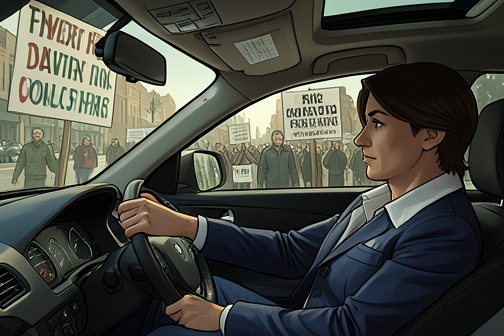
[Connell](entity:character-recall-character-connell-537046691930) tells [Marianne](entity:character-recall-character-marianne-bce7426f25b0) that he loves her during the drive back to [Carricklea](entity:location-recall-location-carricklea-95719fd7e6e1) after they attend a protest in [Dublin](entity:location-recall-location-d7ee455b2147). She says she loves him too, and he continues driving without further comment. The brief exchange makes their mutual love explicit without presenting it as a solution to grief, family strain, or the violence they have just protested against.
## Background and Setting
By this point, Marianne is living at home again, with little to occupy her weekdays beyond household tasks and time in the garden. Her mother and brother are at work, and the home feels less welcoming in the absence of [Lorraine](entity:character-recall-character-lorraine-4a3d0ed0f14d), who has taken a full-time job at a hotel. Marianne’s return home leaves her in close proximity to her brother, whose repeated demands that she discuss their arguments make ordinary domestic life tense.
Her friendship with [Joanna](entity:character-recall-character-joanna-3d81f486abc1) offers a different view of intimacy: Marianne is glad to see Joanna and Evelyn together, and their happiness gives her a glimpse of a kind of life she feels unable to reach herself. That sense of distance coexists with her continuing closeness to Connell, whose presence remains part of her daily life even as she faces isolation and uncertainty.
## The Protest and the Drive
Marianne and Connell attend a protest against the war in Gaza with [Niall](entity:character-recall-character-niall-04095e658a4f) and thousands of other people. The crowd carries signs, banners, and megaphones; the march crosses O’Connell Bridge, with drums and chanting making it loud and slow. The weather is hot, and Marianne’s shoulders become sunburned. In the crowd, she wants her life to mean something and hopes to oppose violence by the powerful against the weak. At the same time, she recognizes that she cannot end violence on a global scale and may be able to help only a few people. The modest scale of that possibility troubles her, though she understands that refusing to help anyone is not the answer.
That evening Connell drives Marianne back to Carricklea, although she had said she would take the train. They are both tired. As they pass through Longford, a White Lies song popular when they were at school plays on the radio. Without touching the dial or raising his voice, Connell tells Marianne that he loves her. She answers that she loves him too. He nods and keeps driving, as if nothing has changed; the scene’s restraint leaves the declaration at once decisive and unceremonious.
## Meaning and Narrative Context
The exchange occurs against the continuing aftermath of [Rob](entity:character-recall-character-rob-2c4f1be85baf)’s suicide. Connell has told a university counsellor that he feels guilty for not staying in touch with his school friend and for never replying to Rob’s last message. His anxiety has worsened into severe distress and panic attacks, and a [Beck Depression Inventory](entity:object-recall-object-beck-depression-invent-972fcdd978b0) score of forty-three leads the counsellor to identify a very serious depression. The declaration to Marianne does not erase this grief or make it a cure; its importance lies in the intimacy and steadiness it establishes within a period of emotional difficulty.
Marianne’s thoughts about Rob also complicate the scene’s emotional background. She remembers how he participated in bullying her at school, even as she reflects that cruelty can damage the person who inflicts it as well as the person who suffers it. After his death, she had struggled with other people’s public expressions of grief on his Facebook page, but later recognizes that they were grieving and wishes she could have forgiven him. The declaration takes place within a world where love and loss do not cancel one another: Connell and Marianne affirm their bond while grief, regret, and unresolved conflict remain present.
The scene’s form reinforces that distinction. A public protest gives Marianne a vast, difficult-to-measure cause; the return journey narrows attention to two people in a car, a familiar song, and a few direct words. Connell’s declaration is not accompanied by a plan or explanation, and Marianne’s answer is equally simple. Their mutual confession makes their love explicit, while the continued motion of the car preserves the ordinary life in which that love must exist.
Event 20
Connell takes Marianne away after Alan attacks her

[Alan](entity:character-recall-character-alan-e41a9d4c99ac)’s attack on [Marianne](entity:character-recall-character-marianne-bce7426f25b0) ends a confrontation over her visit to [Connell](entity:character-recall-character-connell-537046691930): after her brother threatens her and blocks her, she seeks refuge in her bedroom, where he forces his way in and injures her. When Connell arrives, he confirms that Alan was responsible, orders Marianne to get into his car, and warns Alan not to harm or threaten her again. In the car, he tells Marianne that she was right to call and promises to protect her. The rescue is both immediate and intimate: a moment of danger becomes a renewed declaration of love and trust.
## Causes and Background
Marianne returns home after leaving Connell’s house abruptly. Earlier, she had felt a frightening emptiness and concluded that she and Connell had grown apart: while he had become more adjusted to the world, she believed she had deteriorated beyond what he could accept. This despair forms the emotional backdrop to the confrontation, but the immediate conflict begins when Alan questions where she has been and objects to her seeing Connell.
Alan invokes local gossip and Connell’s mental health, calling him unstable and warning Marianne not to go near him again. He says people in town are talking about her and uses a degrading insult for Connell. Marianne answers that she cannot imagine caring what people think. Alan’s attempt to control whom she sees thus collides with her refusal to defer to public opinion; his verbal threats escalate into violence.
## The Attack at Home
When Marianne tries to go upstairs, Alan blocks her way. He says he does not want people claiming Connell is sleeping with his sister and grips a beer bottle tightly. He then throws it; it smashes behind Marianne on the tiled floor. She runs upstairs and presses herself against her bedroom door, trying to hold it shut as Alan follows and kicks it from the other side.
Marianne asks him to leave her alone and offers to clean downstairs without telling [Denise](entity:character-recall-character-denise-829ff5a7cbf3). The exchange reveals the pressure of the family environment: even while trying to protect herself, she anticipates managing the aftermath and concealing what happened. In her thoughts, she frames the violence through a deep-rooted conviction that she is bad and corrupted, as though earlier experiences have been buried in her body. The attack is therefore not only a physical threat but an encounter with the self-condemnation that has shaped her understanding of her life.
The door gives way and strikes Marianne in the face. Alan enters the room; Marianne’s vision swims, and she realizes that she is bleeding. The event’s abruptness contrasts with her attempt to hold the door and keep the confrontation contained. Her fear, already present in her effort to evade him, becomes a visible injury that she can no longer hide.
## Connell Arrives
After Alan attacks her, Marianne contacts Connell. He pauses when her call comes in, then answers and asks whether she is all right. He leaves for her house, driving in an unsettled state: the radio feels intolerable, his hands are damp on the steering wheel, and his attention is disturbed. This physical agitation anticipates the intensity of the scene he is about to enter.
Marianne opens the door with a tissue over her face. Her clothes and wrist are stained with blood, and Connell sees Alan coming down the stairs behind her. She says she thinks her nose is broken, though she has looked online and does not believe it requires emergency treatment; she plans to see a doctor the next day if it still hurts. Connell asks directly whether Alan did it. Marianne nods, frightened. He does not debate her account or demand an explanation: he shakes his keys and tells her to get in the car.
Alan challenges Connell and insists that he did nothing. Connell says he needs to talk to him, then approaches until Alan is backed against the banister. Connell is so physically overwhelmed that his vision blurs and he has to steady himself with a hand on the door. Even so, he warns Alan that if he touches Marianne again or says anything bad to her, he will come back and kill him. Alan appears frightened and calls for his mother, but nobody comes down the stairs. Connell’s intervention turns the household confrontation into an explicit boundary: Alan is told that further violence will have consequences.
## Aftermath and Significance
In the car, Marianne sits silently, holding a hand to her face. She apologizes for bothering Connell and says she did not know what to do. He tells her not to apologize and says it is good that she called. His reassurance is specific to the danger she has just disclosed: he tells her that nobody will hurt her like that again.
Connell then tells Marianne that he loves her and that he will not let anything like this happen to her again. She meets his gaze before closing her eyes and settling back against the headrest; her stillness reads to him as extreme weariness or relief. Her thanks closes the immediate exchange, while the promise gives it a larger emotional meaning. The scene links practical rescue with intimacy, but it does not erase the danger or resolve the abusive household in which Marianne remains.
The episode also sharpens the contrast between Marianne’s earlier belief that Connell has become too adjusted to understand her and his response when she calls. He comes despite his own visible distress, recognizes what has happened, and acts. For Marianne, asking for help interrupts the isolation of the attack; for Connell, seeing her at the door converts concern into direct responsibility. Their shared silence in the car does not require her to explain further before he believes and supports her.
Event 21
Connell and Marianne kiss publicly and declare their love on New Year’s Eve 2014

The New Year’s Eve gathering at Kelleher’s becomes a public turning point in [Marianne and Connell’s relationship](entity:relation-recall-relation-marianne-and-connell-60ffa5c0b9f2). At midnight, surrounded by people who knew them at school, [Connell](entity:character-recall-character-connell-537046691930) kisses [Marianne](entity:character-recall-character-marianne-bce7426f25b0) and tells her that he loves her. After years in which their closeness repeatedly exceeded what they acknowledged to others, the public gesture makes their bond visible and gives Marianne a certainty about his love that she no longer has to wonder at.
## Background: a private bond and a difficult return
By December, Marianne had not seen her family since the summer. Her mother had not contacted her, and messages from [Alan](entity:character-recall-character-alan-e41a9d4c99ac) said that their mother considered her a disgrace. Marianne did not reply. She had imagined the accusations and truths that might surface if her mother eventually spoke to her, but no such conversation came; even her birthday passed without a word from home. Planning to remain alone at college over [Christmas](entity:time-recall-time-christmas-a573265d0167) to work on her dissertation about Irish carceral institutions after independence, she was not expecting a family welcome.
Connell wanted Marianne to come back to [Carricklea](entity:location-recall-location-carricklea-95719fd7e6e1) with him. He said [Lorraine](entity:character-recall-character-lorraine-4a3d0ed0f14d) would be glad to have her and suggested that Marianne speak with her; Lorraine instead called Marianne herself and invited her to stay. Marianne accepted because she trusted Lorraine to know what was right. The invitation mattered in practical terms, offering a place to spend Christmas, but it also brought her into a household where she was welcomed rather than treated as a disgrace.
The drive from [Dublin](entity:location-recall-location-d7ee455b2147) to [Foxfield](entity:location-recall-location-foxfield-a8757070a0b3) was full of conversation, jokes, and funny voices. Marianne later wondered whether she and Connell had been nervous. At Lorraine’s home, coloured lights filled the windows, tea was brought to Marianne by the fire, and she felt relaxed enough almost to fall asleep. Christmas itself was busy: relatives and children came and went, Connell stayed up playing FIFA with a younger cousin, and Marianne and Lorraine spent much of their time in the kitchen. When someone exclaimed that Connell had a girlfriend, another person said she was in the kitchen. The exchange made their relationship explicit within his family circle before the New Year’s gathering made it visible to their old school friends.
## The silence and estrangement Marianne carries
Marianne’s estrangement from home surfaces again when she and Connell see [Denise](entity:character-recall-character-denise-829ff5a7cbf3) in a supermarket on New Year’s Eve. Lorraine greets her politely, but Denise walks past without speaking. Marianne asks how people in town see her mother; Lorraine says gently that she is considered a bit odd. It is the first time Marianne has heard, or even considered, that others might view Denise that way. Connell does not join the conversation. In the car, Lorraine reaches back and squeezes Marianne’s hand, a quiet gesture of support amid the unresolved family conflict.
That evening Connell says that everyone from school will be at Kelleher’s. Marianne suggests staying in, but he tells her she should come. She replies that she would not disobey an order, echoing the dynamic of trust and surrender that has long been part of their private intimacy. Here, however, the immediate question is whether she will enter a public space with him. She goes, and the night places their relationship before a group whose past knowledge of them includes the secrecy and scandal attached to their earlier closeness.
## The gathering at Kelleher’s
Kelleher’s is packed, and the two repeatedly wave and mouth greetings to people across the room. [Karen](entity:character-recall-character-karen-5edf61fe2c90) embraces Marianne at the bar and invites her to dance with the others. Connell carries their drinks down to the dance floor, where Rachel, [Eric](entity:character-recall-character-eric-7ec3f96e28e6), Lisa, Jack, and Ciara Heffernan are gathered. The room is too loud for ordinary conversation; people mostly stand together and shout into one another’s ears. Karen makes playful boxing motions, more people join the group, and the evening becomes a series of greetings and embraces rather than a conventional dance.
At midnight, everyone cheers. Connell takes Marianne into his arms and kisses her. She feels the attention of the others as they watch. She considers several possibilities: perhaps they had not believed the relationship until then, perhaps curiosity remained about something that had once been scandalous, or perhaps they were simply observing the chemistry between two people who had repeatedly been unable to leave one another alone. Marianne recognizes that she, too, might have looked. The scene therefore makes their private attachment publicly legible without claiming that the onlookers share a single motive.
When they draw apart, Connell looks Marianne in the eyes and says, "I love you." She is laughing, her face red, and experiences the moment as a form of redemption: in her interpretation, he has chosen to redeem her. The declaration is not merely an admission of feeling. Spoken in public, with their old acquaintances present, it counters the earlier pattern in which their intimacy and their public status could diverge. The kiss and words make his choice visible to the people watching them as well as to Marianne.
## Consequences and significance
The public setting changes the force of Connell’s declaration. Their relationship has been shaped by closeness, separation, and uncertainty about what they mean to one another; the onlookers turn the midnight kiss into an acknowledgment that cannot be confined to a private exchange. Marianne thinks that Connell must have behaved so unusually in public deliberately, to please her. The evidence presents this as her understanding of the gesture, not as an explanation he states himself.
The moment also resolves a question that had persisted beneath their ordinary care for each other: Marianne knows that Connell loves her and no longer wonders about it. Her response does not imagine love as independence from another person. Instead, she reflects that nobody can be completely independent, and considers accepting mutual dependence rather than continuing to resist it. The ending’s significance lies in that conjunction: Connell makes his love public, and Marianne can accept the vulnerability of relying on him without treating that reliance as proof of her unworthiness.
Event 22
Connell is accepted into a New York MFA program

[Connell is accepted into a New York MFA program](entity:event-recall-event-connell-2aaf4bb6721f), an opportunity that brings an unspoken ambition into the room [Marianne](entity:character-recall-character-marianne-bce7426f25b0) shares with him and forces them to confront what their closeness might cost. The news is not simply a professional success: it becomes a test of whether [Connell](entity:character-recall-character-connell-537046691930) can imagine leaving, and whether Marianne can encourage him to do so without treating separation as a denial of their love.
## The Offer and Its Disclosure
The scene begins after Marianne comes out of the shower and finds Connell sitting up in bed, her laptop open on his lap. His eyes are red and sleepy; the screen’s glow falls across his face. He tells her that a university in [New York](entity:location-recall-location-new-york-f84f7f10ee10) is offering him a place on its creative writing MFA. Marianne, still dressing with wet hair, is surprised not only by the acceptance but by the fact that he applied without telling her.
Connell says he had thought admission was a long shot and that he does not know why he applied. He initially presents the offer as something he will not take, insisting that it does not matter. His subdued manner makes the news feel less like a celebration than a possibility he has already tried to dismiss. Marianne congratulates him, but the exchange quickly turns from the value of the opportunity to the silence surrounding it.
## The Unequal Sharing of News
Marianne asks whether Sadie knew about the application. Connell confirms that she did, explaining that Sadie had encouraged him to apply. The distinction stings: he shared the possibility with someone else while withholding it from Marianne, the person closest to him. Marianne asks whether he is in love with Sadie, turning his omission into a question about the security of their relationship.
Connell rejects the suspicion and says he does not even like Sadie as a friend, describing her as annoying. He is frustrated that Marianne has inferred romantic feeling from his failure to tell her about the application. The argument exposes a familiar difficulty between them: a gap in communication gathers emotional meaning before either can make it plain. Marianne eventually says that she sometimes feels he wants to be around people who understand him. Connell answers that she is the person who understands him, setting her apart from Sadie rather than treating them as competing confidantes.
His apology carries a different explanation. He says he sometimes feels embarrassed telling Marianne things like this because they seem stupid, and admits that he still looks up to her. He fears she will think him deluded. The application was therefore not hidden because he valued Sadie more, but because Marianne’s judgment matters so much to him that he finds it difficult to expose an uncertain aspiration to it. His private shame over seeming foolish has helped keep an important possibility from the person whose understanding he most wants.
## Marianne’s Encouragement and Connell’s Choice
Marianne tells Connell to go to New York and accept the offer. She even allows for the practical possibility that he could receive funding. When he reminds her that she wanted him to stay the following year, she answers that she can stay while he goes, and that it is only a year. Her encouragement is concrete, but it is also an act of relinquishment: she refuses to make her own wish for his presence the limit of what he may choose.
Connell cannot receive the suggestion as a simple expression of support. He calls it ridiculous and says he will not go without her; he would not even be where he is now if not for her. Marianne recognizes the truth of that claim, imagining how differently his life, his relationships with women, and his hopes for love might have developed without their relationship. She also sees their shared history as mutual shaping rather than one person’s rescue of the other: they have been like two little plants growing in the same plot, contorting to make room for one another. She can take satisfaction in having helped make a new life possible for him, even if that life may lead away from her.
## Love, Dependence, and an Unsettled Future
Connell says he would miss Marianne too much and would be sick, though he concedes that this might be true only at first and that he could recover. The distinction gives the proposed separation its real weight: it would hurt, but hurt does not necessarily make it impossible. Marianne brushes the knots from her hair slowly while they sit in silence, a measured, patient action set against the urgency of the decision.
Connell tells her that he loves her and will never feel the same way for someone else. Marianne believes him. Yet certainty about his love does not settle what he should do. He admits that he does not know and asks her to say she wants him to stay, promising that he will. The offer returns the choice to Marianne at the very moment she has tried to give it back to him. Her eyes close; she does not answer before the scene ends. The acceptance therefore remains an open decision, leaving the couple’s attachment secure in feeling but unresolved in its practical future.
## Narrative Significance
The acceptance draws together several strands of their relationship: silence, embarrassment, dependence, and the difficulty of making a self-directed choice when another person’s needs matter profoundly. Connell’s first response is to minimize the opportunity, while Marianne’s is to urge him toward it; neither response erases the other’s attachment. Their intimacy appears not as perfect understanding but as a relationship in which a concealed application can provoke suspicion, an admission of shame can clarify the concealment, and an act of encouragement can become a painful negotiation over who is allowed to leave.
The scene also complicates the language of dependence. Marianne thinks of Connell as someone who helped make her a different person, while recognizing that she has made a new life possible for him. Their shared growth is neither wholly liberating nor a reason to remain in one place. By ending on Connell’s conditional promise and Marianne’s silence, the narrative makes the offer matter less as a confirmed departure than as a choice they cannot resolve simply by affirming that they love each other.
Event 23
Connell and Marianne’s parting
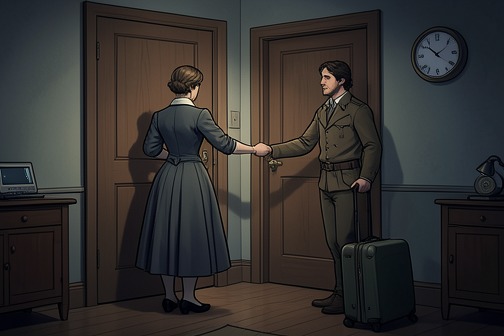
[Connell and Marianne’s parting](entity:event-recall-event-connell-and-marianne-s-1499673c8340) is a quiet but consequential choice: [Marianne](entity:character-recall-character-marianne-bce7426f25b0) tells [Connell](entity:character-recall-character-connell-537046691930) to go to [New York](entity:location-recall-location-new-york-f84f7f10ee10) despite their love, accepting the uncertainty of separation because she believes his future should not be limited by her wish to keep him near. The scene ends not with a promise that they will remain together, but with her assurance that she will always be there.
## The decision to leave
After Marianne learns that Connell has applied for an opportunity in New York, she asks whether Sadie knew about the application before she did. Connell explains that Sadie had encouraged him to apply, but says he does not understand why the omission matters. Marianne’s question about whether he is in love with Sadie exposes her fear that he wants to be with people who understand him. Connell denies that interpretation and apologizes for not telling her, explaining that he feels embarrassed when he shares ideas that seem foolish to him and still looks up to Marianne.
Marianne then tells him that he should accept the offer. She says she is sure he could obtain funding and proposes that she stay while he goes, framing the absence as a year rather than a permanent departure. Connell objects that he will not go without her and says he would not even be where he is without her. His response makes the choice more than a practical question about study or travel: the future he is considering is bound up with what their relationship has enabled.
## Love and mutual change
Connell tells Marianne that he would miss her too much and that the separation would make him ill, at least at first. He also says that he loves her and will never feel the same way for anyone else. Marianne believes him. Yet his declaration does not settle the decision. When he asks her to tell him to stay, she closes her eyes rather than giving the answer that would keep him beside her.
The scene places intimacy and independence in direct tension. Marianne acknowledges that Connell might not return, or might return as a different person, and that what they have now cannot be restored unchanged. Still, she thinks their lives have grown around one another like two plants sharing the same soil. They have altered each other’s possibilities, not simply accompanied one another through them. She understands that she has helped make a new life possible for Connell, and that this is something she can value even if his next life takes him away.
## An open-ended separation
Marianne tells Connell to go and says she will always be there. The reassurance is emotional rather than a guarantee about what their relationship will look like after the year apart. The scene does not establish whether Connell will return or whether their present closeness can survive the change; its ending leaves that future unresolved.
For Marianne, however, the choice marks a change in how she understands loss. She expects loneliness, but judges it less painful than the former conviction that she was unworthy. The goodness Connell brought into her life has become part of her own sense of self rather than something she can possess only by keeping him near. Their parting therefore carries both grief and affirmation: they may lose the shared life they know, but their influence on one another remains, and Marianne can let Connell go without treating that love as proof that she must be left behind.